
Why You Don't Look Good in Photos | Sharon Gabay
"Why don't I look good in photos?" A headshot photographer with 15+ years' experience explains why it happens and how a professional shoot changes it.
"Why don't I look good in photos? I'm just not photogenic." These are the lines I hear most often in the studio. People walk into a headshot session with a polite smile, but inside they're certain the result will disappoint. They don't believe they can be photographed well, because they've never seen a photo of themselves they truly loved.
I've been shooting headshots for over 15 years, in my permanent studio serving the whole country and with a mobile studio I bring straight to the office, the clinic or anywhere convenient for the client. I've photographed politicians, CEOs, lawyers, doctors, entrepreneurs, coaches and people who simply wanted a good profile photo for LinkedIn or their website. And almost all of them said the same thing at first: "I just don't look good in photos."
So let's break it down. Why this happens, what's really behind that feeling, and how a professional photographer handles it.
The gap between what you see in the mirror and what the camera sees
When you look in the mirror, you see a flipped image: what's on the right appears on the left. It sounds trivial, but your brain has been used to that version for years. It "learned" your face reversed and built a stable mental picture around it.
The camera doesn't flip. It captures you the way other people see you, and that's exactly why the photo feels "wrong." Not because you're unphotogenic, but because you're seeing a version of yourself you're less used to.
There's even a scientific name for it: the mere-exposure effect. The more we're exposed to a particular stimulus, like our own face in the mirror, the more we prefer it. A photo from the camera breaks that habit, so it feels foreign. Not bad, just unfamiliar.
And there's another layer. The mirror is dynamic. You see yourself moving, fixing your hair, smiling. The camera freezes a single instant. A moment when the eye might have been half-closed, or the smile hadn't yet peaked, or the angle wasn't flattering. That isn't you. It's one moment out of thousands.
Self-awareness — the great enemy of a good photo
The number-one problem in headshot photography isn't lighting, equipment or angle. It's self-awareness.
The moment someone knows a camera is pointed at them, their body changes. The shoulders tense, the chin drops or lifts too much, the smile shifts from something natural into a forced pose. The eyes, which are the single most important thing in a headshot, lose their spark.
It happens to everyone, even people used to being in the spotlight: politicians, CEOs, media figures. The moment they know the photo "matters," they start "performing" for the camera instead of simply being in front of it.
That's why a large part of my job isn't photography at all. It's conversation. It's creating a space where the client forgets, for a moment, that there's a camera. Often the best shots come when the client thinks we're still "warming up," because that's precisely when their face is natural.
People who haven't been photographed in years — the hardest gap
There's a category of clients I recognize within the first second. People who haven't stood in front of a professional camera in ten or fifteen years. Sometimes they've never been photographed professionally at all.
Their challenge is twofold. First, their self-image is stuck in the past. They still see themselves the way they looked a decade ago. Second, they don't know what to do with their body in front of a camera: where to put their hands, how to stand, where to look.
When they see the results, they experience a shock that has nothing to do with the quality of the photography. They're simply seeing themselves as they are today, perhaps for the first time in years. And it's a delicate moment. That moment asks the photographer for more than technical skill. It asks for emotional intelligence.
I always say the same thing: I'm not turning you back into 25. I'm photographing you as you are today, at your best. And "your best" isn't Photoshop and it isn't filters. It's the right light, the right angle, a genuine expression, and a moment caught with precise timing.
Why selfies and phone photos don't work
A lot of people ask: why do I look terrible in selfies but fine in the mirror? Or the opposite — why do I actually look good in selfies?
A selfie uses a very wide-angle lens that distorts the face. The nose looks bigger, the proportions shift, the depth stretches. That isn't how you look. It's an optical distortion.
A professional headshot photographer works with lenses in a completely different focal range, producing an image far closer to what the human eye sees. On top of that, a phone camera is very limited in its control over light, depth of field and separation from the background — all the things that make the difference between a professional headshot and a throwaway snapshot.
What a headshot photographer actually does that your phone can't
Professional headshot photography isn't "pressing a button with an expensive camera." It's a complete process:
Control over light. Professional lighting lets you sculpt the face — emphasize the jawline, soften wrinkles, create depth and volume. Flat light from a phone erases all of that.
Directing body language. Most people don't know how to stand naturally in front of a camera. That isn't their fault — it's simply not something you're taught. The photographer guides poses gently, so the client feels natural but looks excellent.
Professional editing and retouching. Not heavy Photoshop that erases who you are. Subtle retouching that removes temporary flaws — a breakout, tired bags under the eyes, a stray hair — and leaves your real face intact.
Experience with people. A good headshot photographer has read thousands of faces. They know when the client is tense, when they're faking a smile, and when the real moment arrives. That knowledge is earned only through years of experience.
The psychological side — why we hate photos of ourselves
Psychological research points to several deep reasons people dislike photos of themselves:
Status-quo bias. We prefer what's familiar. The face in the mirror is familiar. The face in the photo, less so.
Focusing on flaws. When you look at a photo of yourself, your eye runs straight to the thing you like least — the nose, the chin, the wrinkles. Other people looking at the same photo don't even notice those things.
The gap between self-image and outside image. Studies show people rate photos of themselves far lower than other people rate those same photos. You simply aren't an objective judge of yourself.
Performance anxiety. People who haven't been photographed in years arrive under pressure: "I've got one session, I have to walk away with a good photo." That very pressure is what keeps the photo from being good.
How to prepare for a headshot — so you actually look good
Before the session: send the photographer pictures of yourself you like — even phone shots, even old ones. It helps the photographer understand which side of you you want to highlight, and what lighting style and angle suit you.
Wardrobe: come in clothes you're comfortable in and feel good wearing day to day. Not new clothes you bought "for the shoot." New clothes change how you feel and move, and it shows in the photo.
On shoot day: sleep well, drink water, arrive as relaxed as possible. Don't show up after a crazy workday. If you can, book the session for the morning hours.
During the session: let the photographer lead. Don't try to "look good." Don't ask to see every photo after every click. Let the process flow. Most of my clients discover that the photos they love most are precisely the ones they didn't know were being taken.
After the session: if you see the gallery and feel "that's not me," wait a day or two. Look again. In most cases, once the initial shock passes, people start to see themselves differently. And usually, far more kindly.
Studio headshots vs. on-location headshots
My permanent studio serves the whole country, but I also work nationwide with a professional mobile studio I bring straight to you — to the office, the clinic, the workspace.
A permanent studio gives full control over light, background and atmosphere. It's the ideal solution for anyone who wants a clean, classic headshot — for example, against a uniform backdrop.
A mobile studio allows photography in your natural environment — at the office, in a meeting room, at the clinic. It's an excellent option for team headshots, for an office shoot day, or for anyone who simply can't make it to a studio. I arrive with all the gear — lighting, backdrops, equipment for controlling light — and set up a full professional studio within minutes.
So, why don't I look good in photos?
You probably do look good. It's just that no one has photographed you right yet — with the time, patience, light and know-how that give a photo a real chance.
I photograph people who arrive certain they're not photogenic. After 160+ five-star Google reviews, I can say with confidence: to this day, not one of them has left the session still thinking so.
Frequently asked questions
- What can I do if I really don't like having my photo taken?
- A professional headshot photographer creates a relaxed, safe atmosphere that lets you be yourself. The real work starts long before the shutter is pressed. Most clients who arrived with camera anxiety were surprised by how quickly they felt at ease.
- How do I look good in a LinkedIn profile photo?
- A strong LinkedIn profile photo needs professional lighting, a clean background, a direct gaze into the lens and an expression that reads as both confident and approachable. A professional headshot gives you an image that works for LinkedIn, your website and your Google Business profile alike.
- Do I need heavy retouching to look good?
- Not at all. Heavy retouching makes a photo look fake and drains the face of character. Subtle retouching removes temporary blemishes while keeping your authentic look intact.
- How long does a headshot session take?
- Sessions run 30–120 minutes depending on the package. Part of that time goes into building comfort and giving direction until we reach the right moment.
- What's the difference between a headshot and a portrait?
- Portrait photography is a broad category that covers any image of a person. A headshot focuses on professional representation — a business image for websites and social media. The goal is a photo that works like a visual business card.
- Can you photograph a whole team at the office?
- Absolutely. A professional mobile studio travels anywhere in the country and sets up right in your office. Team headshot days are planned in advance for a consistent style, background and logistics, so every employee gets photographed without losing a workday.
- Why not just take a headshot myself at home?
- A professional headshot demands control over lighting, angle, body language and retouching — things you can't achieve with a phone camera and window light. When you photograph yourself, self-awareness peaks and there's no one to direct you.
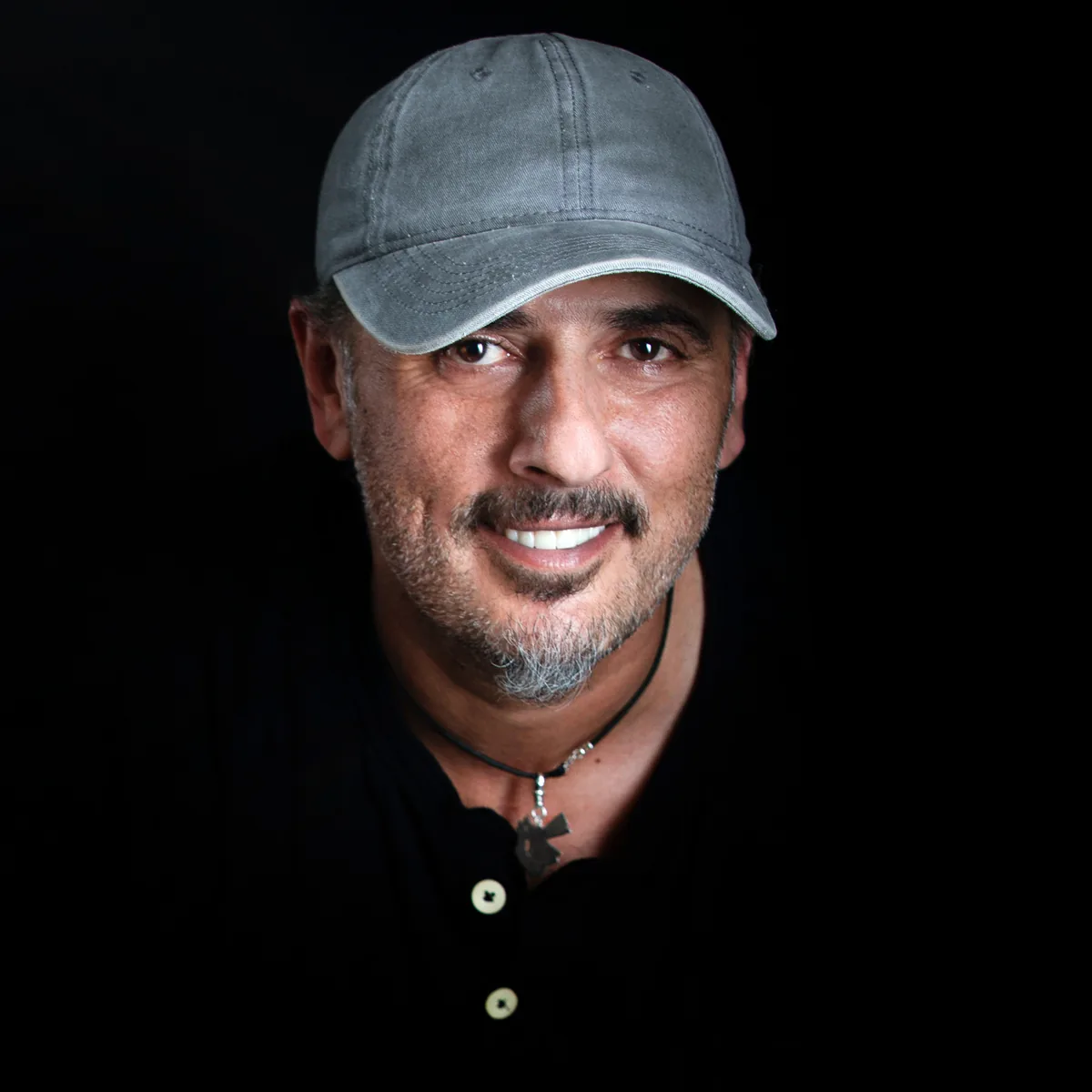
Written by
Sharon Gabay
Portrait, headshot & fine-art photographer · author of six photography books
More about Sharon Gabay →Related articles
Ready for a photo that works for you?
Tell me what you need and we'll find the right format together. We can shoot in my professional studio, or I'll come to you with a full mobile studio — anywhere in Israel.