
Headshots at the Office: How Much Space, How Long the Setup Takes and What Happens on the Day
Headshots at the office, logistics only: 3 by 3 meters of space, meeting room or open space, power, a 20 to 30 minute setup and time per person.
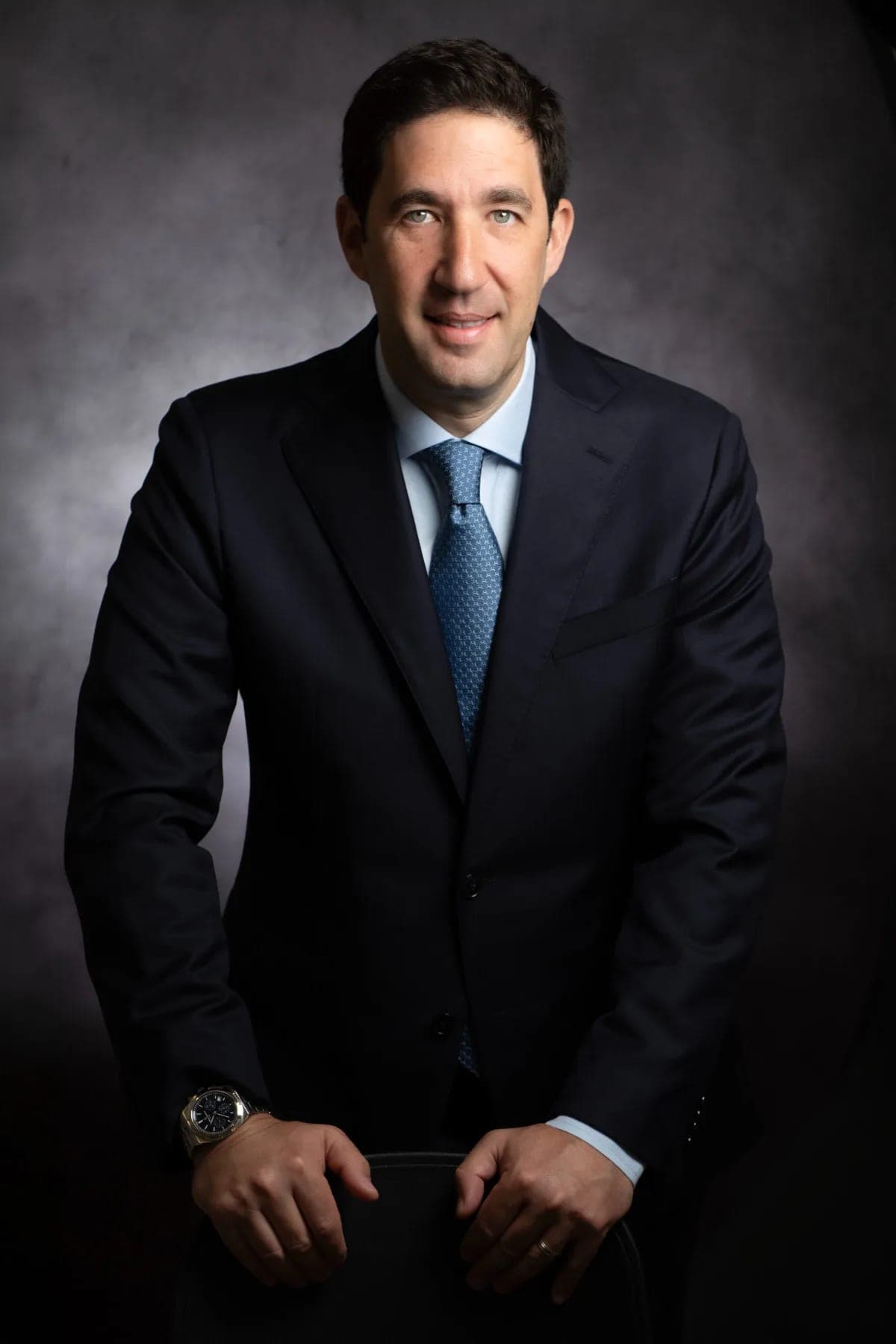
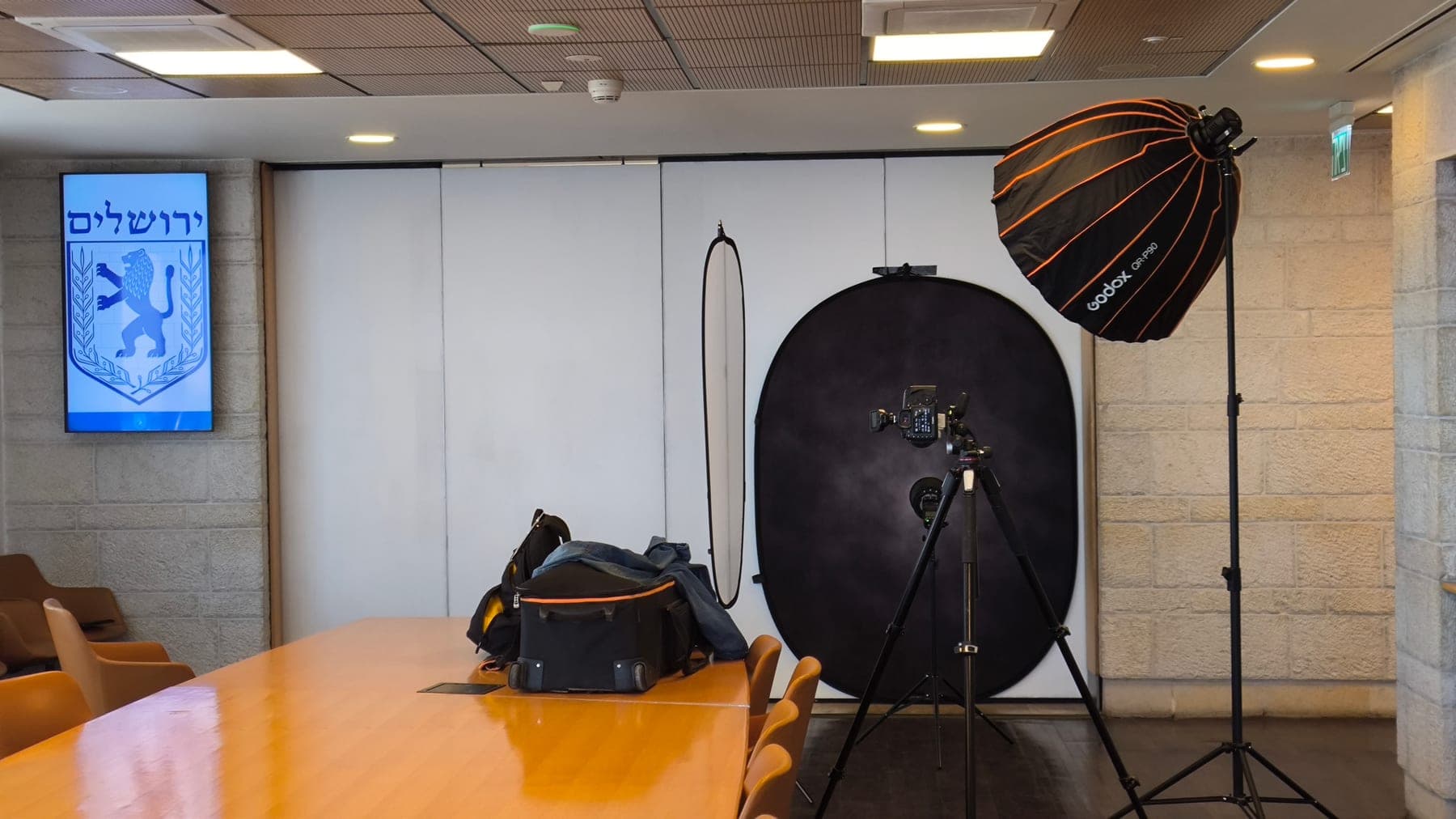
Headshots at the office need a free space of roughly 3 by 3 meters, one power socket, and 20 to 30 minutes to set up the studio and calibrate the light. After that each person comes in for a few minutes, and the teardown at the end of the day takes as long as the setup. That is all the office has to provide.
This article deals with logistics only: space, room, power, timing, what people bring and how consistency is kept. What a shoot at the office includes in terms of result, gear and method, what the mobile studio brings and why the result is identical to the studio, is written in business portraits on location, and I will not repeat it here. Here, only how it runs physically.
The space: 3 by 3 meters
That figure is not arbitrary. It comes from the distances needed between four things: the backdrop, the subject standing or sitting in front of it, the lights on either side, and the camera. A portrait lens needs a certain distance from the subject for the proportions of the face to come out right, so a room that is too small forces a wider lens, and that shows in the picture.
A standard meeting room meets it easily. So does a manager's office, after moving one chair. What does not work: a narrow corridor, or a corner where the camera would have to stand in front of a door that opens.
Meeting room versus open space
A meeting room is the good solution. It has a door, so quiet and privacy for whoever dislikes being photographed in front of an audience. It can be blocked in the calendar for the whole day, and the table is pushed aside or used for alternative garments.
An open space works on two conditions. One, that traffic behind the camera and beside the backdrop can be prevented, because people walking past distract the subject. Two, that the ceiling lighting in the shooting area does not interfere: studio flash is far stronger than it, but nearby fluorescent tubes can tint the shadow. Usually it is enough to move away from them.
A manager's office suits the shoot of the manager and two or three seniors, not a round of forty.
Power and conditions
One power socket near the shooting area. The lighting is studio flash with softboxes, and its consumption is ordinary. There is no need for a dedicated line, special air-conditioning or darkening the room: the flash is stronger than the daylight coming through the window, so a window does not interfere. What can, is a large mirror or a glass wall right behind the camera, which may throw light back, and then the set moves half a meter.
Setup and teardown: 20 to 30 minutes
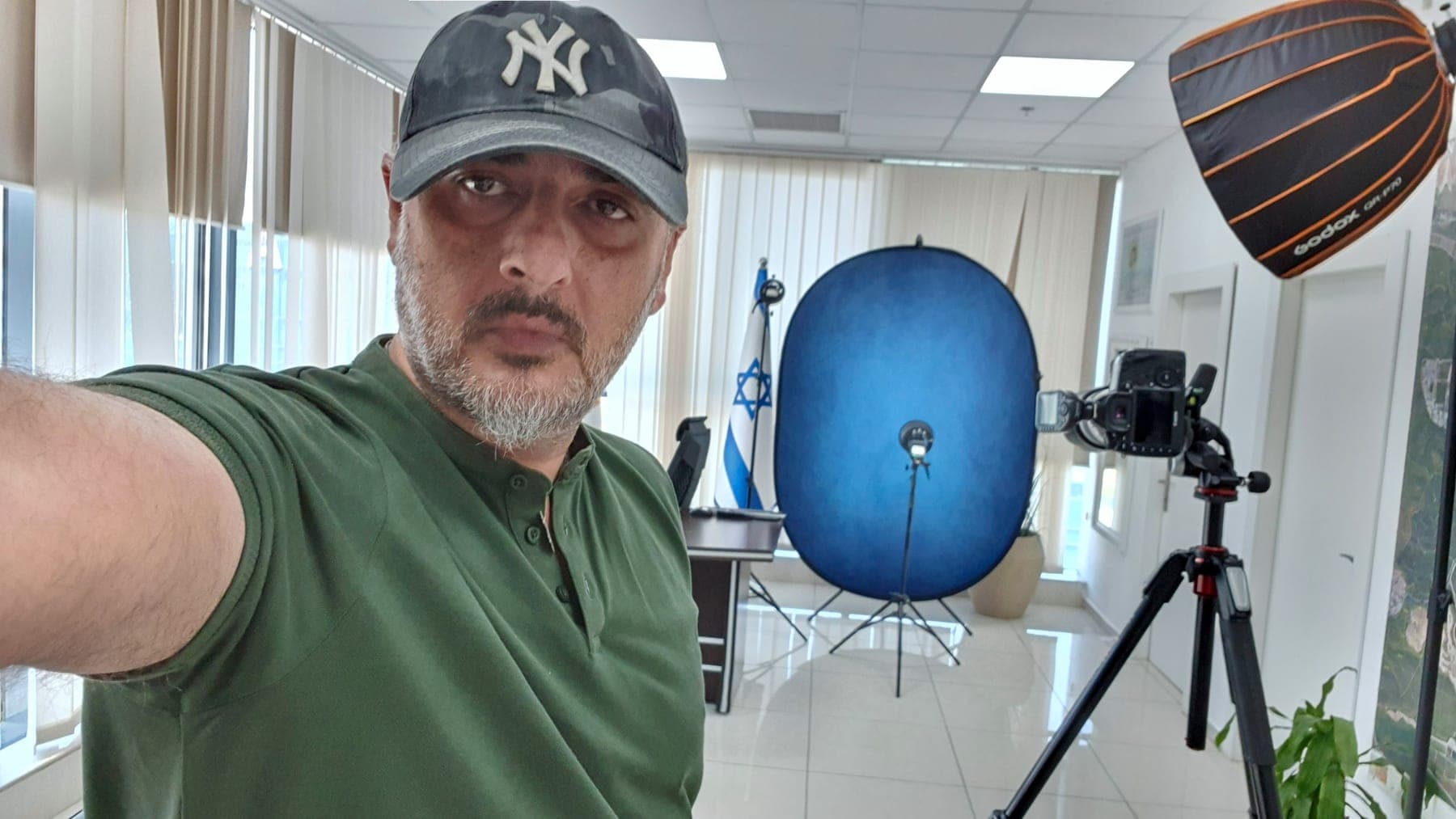
The mobile studio arrives with lights, stands, a backdrop, a camera and lenses. The setup starts before the first subject comes in, and at its end the light is calibrated. From that moment it does not move: the same position, the same power, the same distance, for the whole day.
The teardown at the end of the day takes as long as the setup, and the room returns to its state. How the setup looks, with the behind-the-scenes pictures, is on the mobile studio for headshots page.
How long each person takes
A few minutes in front of the camera, direction included: where the shoulder goes, where the chin goes, when to breathe. The pace is about ten participants per hour and a half. A team of 20 is done before the lunch break, and a full photo day covers 40 to 45 people.
That pace is only possible because the light is already built. If the light were rebuilt for every person, five would fit in a day. So the setup is the long part, and the shoot itself is short.
What employees need to bring
Themselves, on time, in solid-colour clothes according to the dress code agreed in advance. One alternative garment is fine, a shirt or a jacket, and it waits on the table in the room. No special makeup is needed: with the selective-light method ordinary everyday makeup looks excellent. No props, no practising in front of the mirror. The full personal preparation is in how to prepare for a headshot session, and whoever organizes the day on the company's side will find their checklist in how to organize an employee headshot day.
How consistency is kept
Consistency on a team page comes from four things that do not change during the day: the backdrop, the position and power of the lights, the distance between the subject and the camera, and the crop. All are set during the setup and kept.
Those parameters are recorded after the day too. An employee who joins a few months later is photographed in a catch-up session that recreates them, at the office or in the studio, and their picture enters the team page with no sign that it was taken on another date.
Three common scenarios
A meeting room, a team of twenty. The set is built at one end of the room, the table is pushed to the other end and used for alternative garments. Setup at half past eight, the first employee at nine, the whole team before the lunch break, teardown after it.
A corner of an open space, a team of ten. The backdrop is placed so that it also blocks the line of sight from the other employees to the subject, and the camera has its back to the wall. Keep away from the ceiling lights. The round is over in an hour and a half.
A manager's office, three seniors. The set is built in the office itself or in an adjacent room before the manager is free, and calibrated on an empty chair. Each senior comes in for twenty minutes, two sets of clothes, and returns to their diary. How this is done for a whole management team photographed on different days, in executive team and board headshots.
What remains at the office afterwards
The room returns to its state. What remains are the parameters of the set, which I record, and after the editing the files too: all the raw material in a digital gallery, and the selected pictures edited in formats for use. It is worth keeping an orderly copy of both at the company, so that a new website format can be re-cropped without shooting again.
Questions that come up in the coordination call
Should the air-conditioning be switched off? No, it does not interfere. Can we shoot by the window? You can, but the window light is not used: the flash is stronger than it, and only the mobile backdrop behind the subject determines what is seen. Do employees have to come in the order on the list? Preferably, but swapping two does not matter, because the light is the same for everyone. Can people be photographed seated? Yes, and for that a chair without a high back is brought. Does the office show in the picture? Only if you want it to: the default is a mobile backdrop that hides everything.
The difference from a shoot at home
The logistics are identical: the same space, the same power, the same timing. The difference is in who is photographed and in the pace. At the office a team is photographed in a round, and at home usually one person or a few partners, without a tight schedule and with the wardrobe within reach. More on that in headshots at home.
How much it costs
Headshots at the office for a single executive are priced on the regular packages, ₪1,250, ₪1,850 or ₪2,600 VAT included, plus an on-location add-on from ₪1,000 by location. For a team, the price is per person: ₪690 from five participants, decreasing gradually to ₪400 from 50. The breakdown is in how much a company headshot day costs and the full price list on the services page.
In summary
Headshots at the office need three things from the office: a space of 3 by 3 meters, a power socket, and half an hour before the first subject. Everything else, backdrop, lighting, direction and consistency, comes with the mobile studio and stays fixed all day. To book: WhatsApp 054-2000-300.
Frequently asked questions
- How much space do headshots at the office need?
- A free space the size of a standard meeting room, roughly 3 by 3 meters. That is the distance needed between the backdrop, the subject, the lights and the camera. The gear is modular and made for office spaces.
- How long does the setup take?
- Setting up the mobile studio and calibrating the light takes 20 to 30 minutes. The teardown at the end of the day runs at the same pace.
- A meeting room or an open space?
- A meeting room is better: a door, quiet, and it can be blocked in the calendar. An open space works if traffic behind the camera can be prevented and the ceiling lights in the shooting area can be switched off or kept at a distance.
- What is needed in terms of power?
- One power socket near the shooting area. The lighting is studio flash, and its consumption is ordinary.
- How long does each person take?
- A few minutes in front of the camera, direction included. The pace is about ten participants per hour and a half, and 40 to 45 on a full photo day.
- What do employees need to bring?
- Themselves, in solid-colour clothes according to the agreed dress code, and one alternative garment if they like. No special makeup and no props. The backdrop, the lighting and the direction come with the studio.
Written by
Sharon Gabay
Portrait, headshot & fine-art photographer · author of six photography books
More about Sharon Gabay →Related articles
Ready for a photo that works for you?
Tell me what you need and we'll find the right format together. We can shoot in my professional studio, or I'll come to you with a full mobile studio — anywhere in Israel.