
Headshot Examples: 12 Portraits and What Makes Each One Work
Headshot examples from the portfolio: 12 portraits, and for each what works, light, expression, backdrop, clothing and crop, and which use it suits.
What separates a good headshot from an ordinary photo is not the camera but four decisions: how the light sits on the face, which expression was chosen, what is in the background, and how the picture is cropped. When all four are right the picture does not look photographed. It looks like the person, on a good day.
I chose 12 headshots from the portfolio, and for each I wrote briefly what works in it and which use it suits. These are not necessarily the most beautiful pictures, but ones that each demonstrate a different decision. What does not work, and why, is written separately in common headshot mistakes.
Six pictures on a dark backdrop

Dafna Liel, journalist and political commentator. A white shirt on a dark backdrop: the contrast isolates the figure and brings the eye straight to the face. The folded arms give the picture stability, and the smile is small and unforced. A three-quarter crop, so the picture suits a website and the press, and in a tighter crop a profile too.
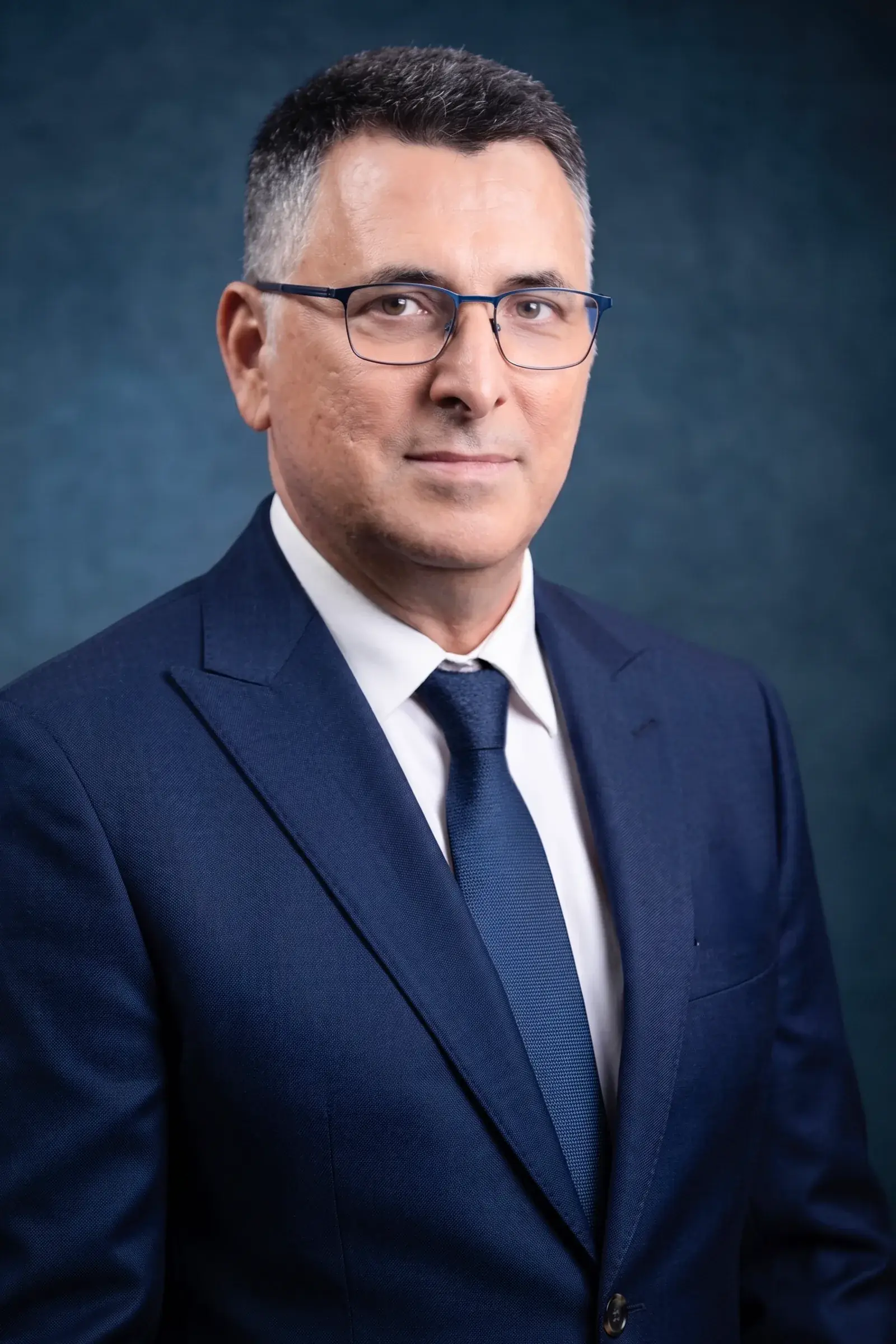
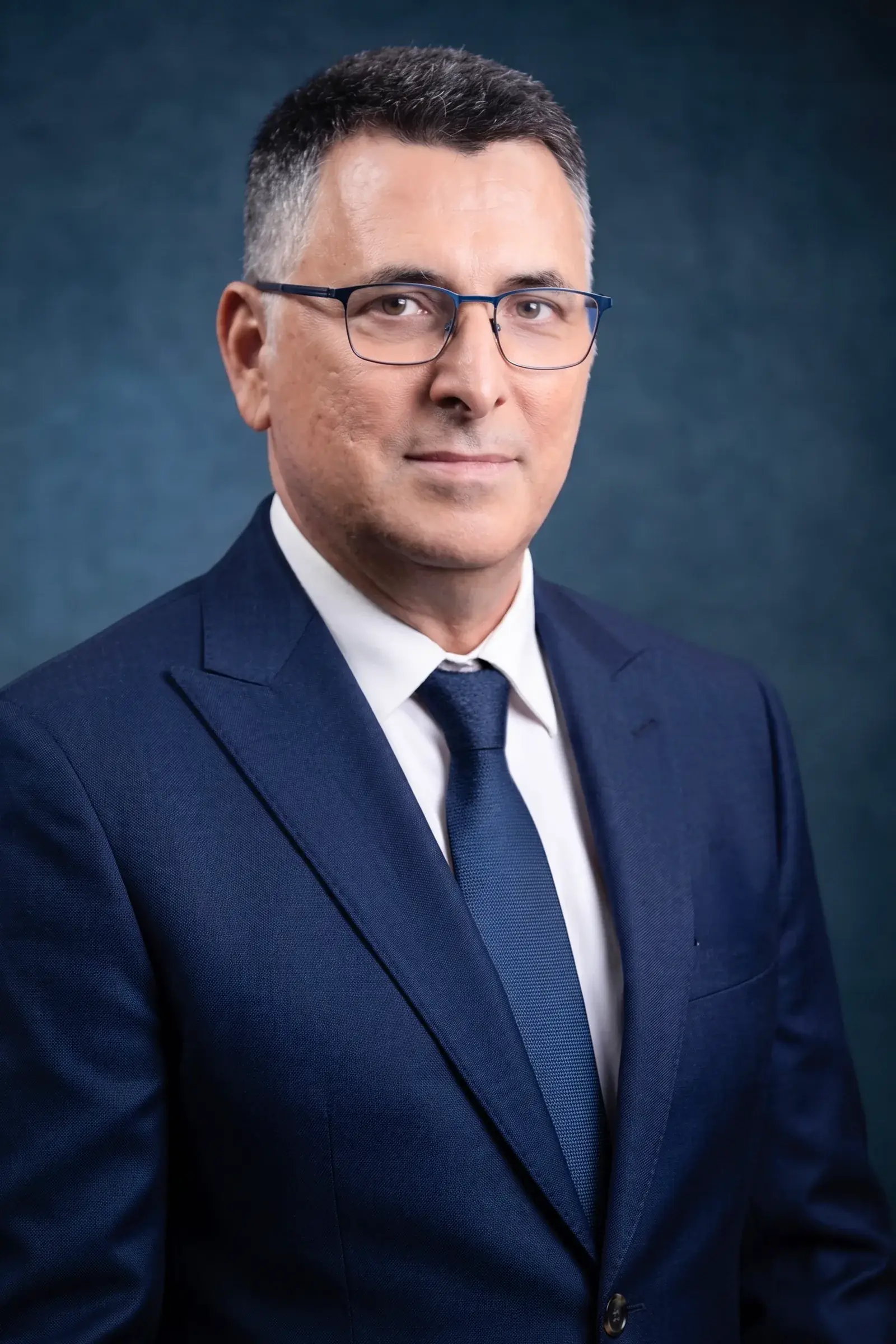
Gideon Sa'ar, Foreign Minister. An example of an official picture that is not frozen: the body at a slight angle, the face to the camera, and the light coming from the side to give the face volume. The suit and the backdrop are in the same colour family, blue on blue, so the face is the only bright point. A picture for an official website, a report and a press release.

Shlomo Filber, lawyer. Here the expression does the work: an open smile, active eyes, and soft light that does not flatten the face. Notice the thin line of light on the shoulder that separates the black suit from the dark backdrop. Without that line the body would be swallowed. A picture for LinkedIn and the team page.
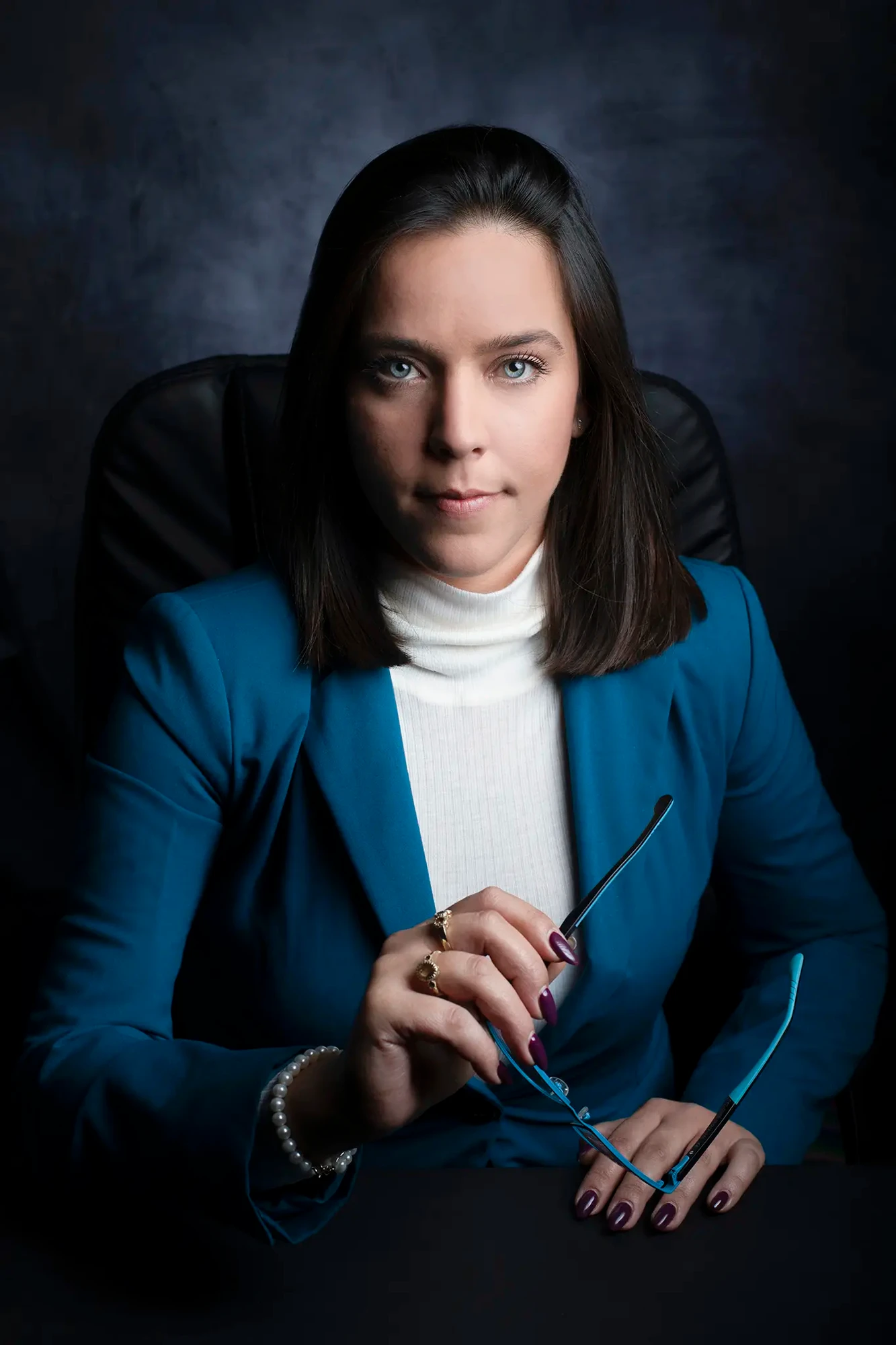
Adv. Talia Shahar. A business portrait, not only a headshot: seated, hands, a prop. The teal blazer is the only colour in the picture, and it sits on a dark grey backdrop, so it does not compete with the face but frames it. The gaze is direct. A picture for a firm's website and personal branding, less for the small circle of WhatsApp.
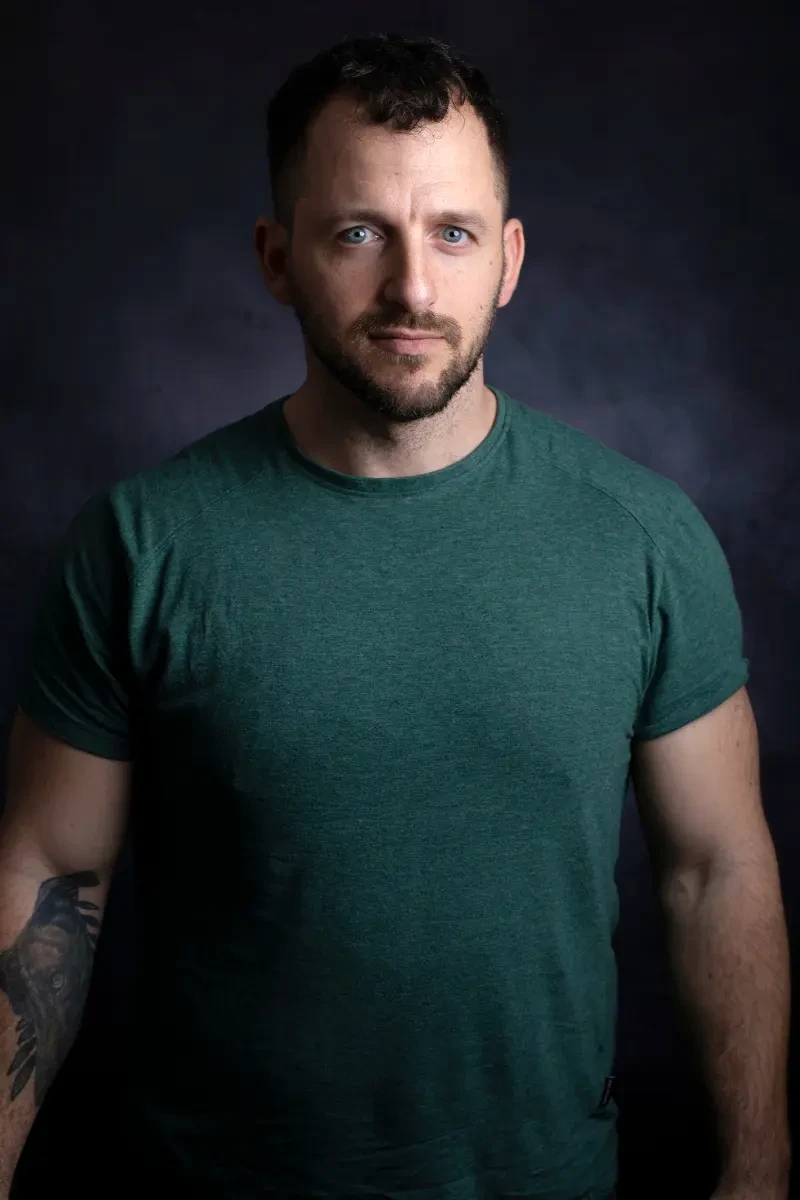
A personal fitness coach. Proof that a headshot does not need a suit. A solid-colour t-shirt, no print, on a dark grey backdrop. The light draws the shoulders and the face, and the expression is calm and direct. Exactly what a coach's client expects to see. A picture for social networks, a website and an ad.

Dr. Orna Berry, scientist. A picture with character: the gaze is not at the camera, the hand is on the chin, and the red glasses are the only coloured detail. A black backdrop and light that falls only on the face and the hand. This is not a profile picture, it is a picture for an article, a lecture and a book cover. From the same session a more direct version comes out too.
Three pictures on a grey or light backdrop

Moshe Lion, Mayor of Jerusalem. An official headshot in the classic head-and-shoulders crop on a neutral grey backdrop. The expression is serious without being stiff, and the light is even and soft. This is exactly the set that works for a management page: the same backdrop and the same light for every member of the management, and the picture also fits any official publication.

Rabbi Menachem Bombach, head of a yeshiva and director of an education network. A light grey backdrop gives an open, approachable picture, so it suits educators and anyone whose role is contact with people. The patterned tie is the detail that gives the grey suit life. The smile is natural. A picture for an institutional website and the organization's publications.

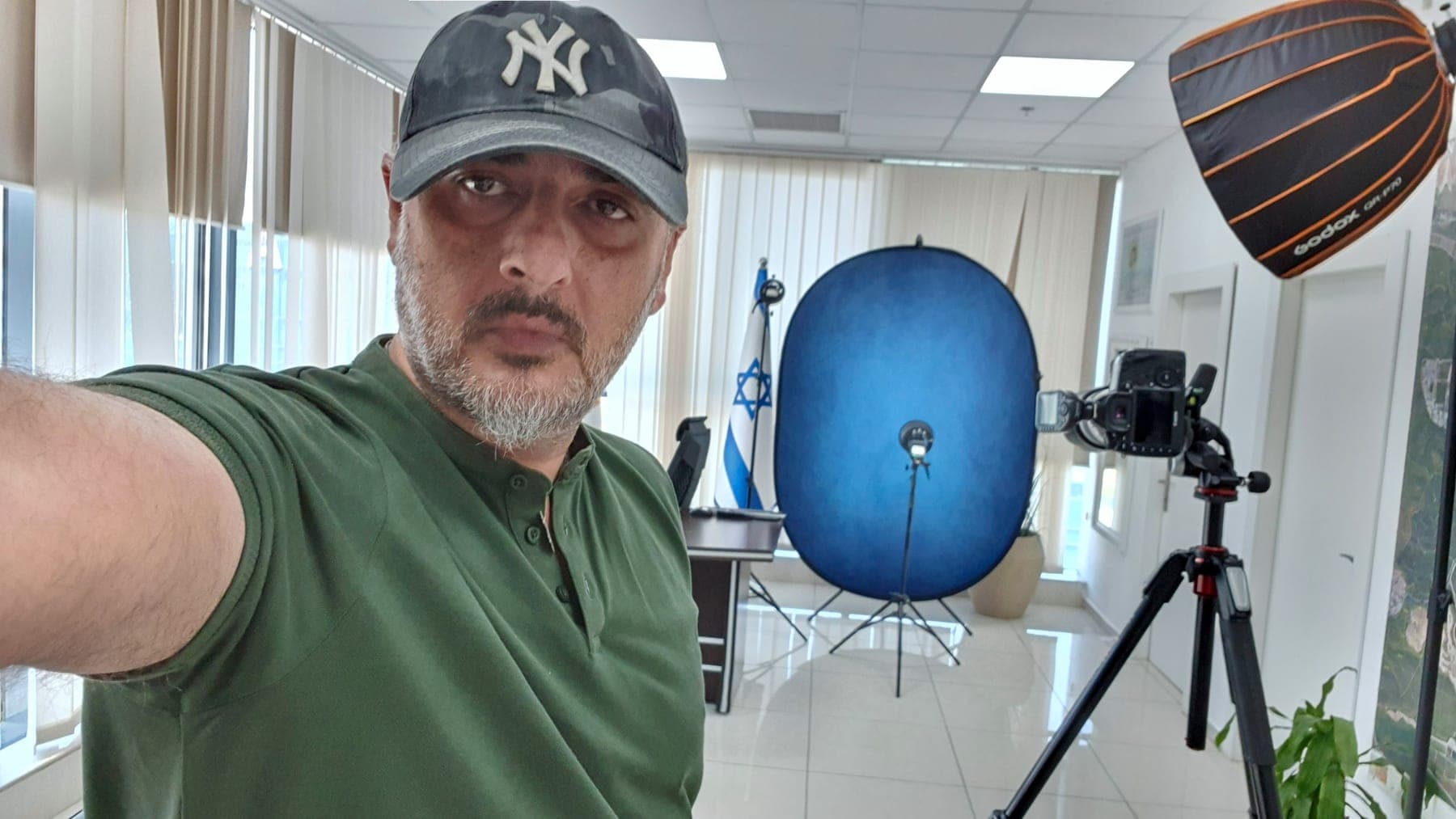
Aliza Bloch, Mayor of Beit Shemesh from 2018 to 2024. The only example here without a studio backdrop: the picture was taken in her office, with the mobile studio, and the flags and emblem behind are part of the story. The clasped hands on the desk and the direct smile give a picture of approachability. A picture for the authority's official publications and the press.
Two in black and white, and one against a flag

Prof. Aaron Ciechanover, Nobel laureate in Chemistry. Black and white removes colour and leaves three things: light, facial structure and expression. The light comes from the side and emphasizes the lines of the face instead of hiding them, and the small smile turns a portrait of a senior scientist into a human picture. A picture for the press, the encyclopedia and a cover. This picture also appears on the portrait for the encyclopedia page.

Prof. Karine Nahon. A portrait rather than a headshot: the pose with the chin on the chair back is close and informal, and the black and white keeps the picture clean. The gaze is direct and the smile gentle. A picture for an author, lectures and articles, and an example of what can be added to a session after the formal headshot has been taken.

Sharren Haskel, Member of Knesset. A campaign picture, not a profile picture. The backdrop is deliberately not neutral: a flag, whose blue and white return in the white dress. The light is directional and leaves one side of the face in shadow, and the expression is serious. A picture for billboards, a candidate's page and campaign materials, not for a firm's team page.
What all 12 pictures have in common
Three things are shared by all of them, in the studio and with the mobile studio alike. The light is always built: it comes from a chosen direction, not from the bulb in the ceiling. The backdrop is always quiet, even when it is a flag or a bureau. And the expression is always directed: not "smile", but a conversation that brings out the right expression at the right moment.
The difference between the pictures is in the use. LinkedIn and a website want head and shoulders on a clean backdrop. The press and a cover tolerate character and body language. A team page demands consistency. In the scoping call before the shoot we decide where the picture is going, and everything follows from that.
What you do not see in the pictures: the conversation
In all 12 pictures there is one thing that is not in the frame: the conversation that went on during the shoot. These expressions were not obtained from the instruction "smile" but from a conversation that draws attention away from the stressful occasion, until the split second when the formal pose drops and something real takes its place. That is the method I called Docu-Studio: planned lighting and backdrop, an expression caught in real time. Whoever looks at the expressions in the list above, the seriousness of Gideon Sa'ar, the smile of Shlomo Filber, the sideways gaze of Orna Berry, sees the result of that, not of staging.
How to use this list
The simple way to prepare for a scoping call is to choose two or three pictures from the portfolio that feel right to you, and send them before the shoot. Not to copy them, but so I know what you see: a dark or a light backdrop, formal or open, head and shoulders or a wide portrait. Then two questions from me: where is the picture going, and what does it need to convey. The backdrop, the light and the clothing follow from that. Whoever comes with two pictures they liked and answers to the two questions finishes the scoping in five minutes.
And what not to do: choose a picture because the person in it looks good. The people in the list look good because the picture was built for them. Yours will be built for you.
In summary
Good headshots look different from one another because the people are different and the uses are different, but they are built from the same four decisions: light, expression, backdrop and crop. All 12 pictures, and dozens more, are in the portfolio. The packages and prices are on the services page, and to book: WhatsApp 054-2000-300.
Frequently asked questions
- What separates a good headshot from an ordinary photo?
- Four things you see at once: light built for the face rather than the light of a room, an expression that is directed rather than forced, a clean backdrop that does not compete with the face, and a crop that suits where the picture will appear. When all four are right the picture does not look photographed. It looks like the person on a good day.
- Which backdrop suits a headshot?
- It depends on the use. A dark backdrop sets off the face and conveys seriousness, a neutral grey suits almost every purpose and team consistency, and a light backdrop gives a clean, open look. In every case the backdrop should be quiet, with no detail that pulls the eye from the face.
- Is a black-and-white headshot worth having?
- As an extra version, yes. Black and white removes the distraction of colour and leaves light, facial structure and expression. Every client also receives a black-and-white version, at no extra charge, and chooses by where the picture will appear.
- Which uses need different headshots?
- LinkedIn and a website need a head-and-shoulders crop and a clean backdrop. The press prefers a picture with a little more character and body language. A team page demands consistency across everyone. A campaign and marketing materials can afford a backdrop or a prop that tells a story. One session can produce several of these versions.
- Were the portfolio pictures taken in the studio or at the client's place?
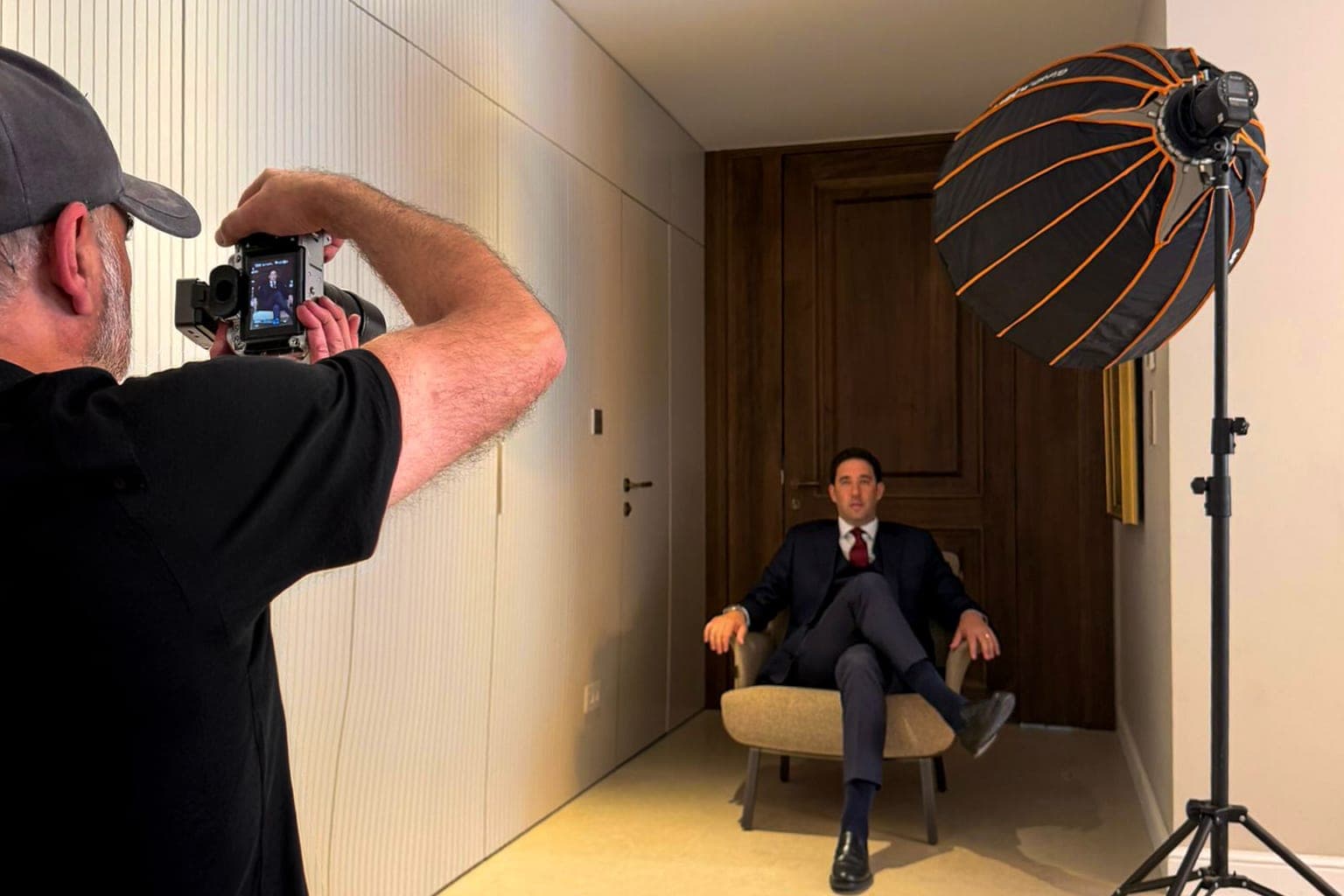
- Both. Some were taken in the professional studio and some with a mobile studio that came to an office, a bureau or a campus. The same gear and the same method in both cases, and the result is identical.
Written by
Sharon Gabay
Portrait, headshot & fine-art photographer · author of six photography books
More about Sharon Gabay →Related articles
Ready for a photo that works for you?
Tell me what you need and we'll find the right format together. We can shoot in my professional studio, or I'll come to you with a full mobile studio — anywhere in Israel.