
How “Jerusalemites” Was Made — 15 Years on the Streets of Jerusalem
How the photography book “Jerusalemites” was made: 15 years shooting Jerusalem, choosing the frames, and the decision to publish in three languages.
Jerusalem is usually documented through its stones: the Western Wall, the spires, the walls. This book seeks to shift the gaze from the symbols to the living fabric; from the myth to the reality. (from the book's introduction)
The following chapters are excerpts from the book's introduction and acknowledgments, translated from the Hebrew.
How a Book Is Born
This book is the record of fifteen years. Not a one-time project, but an ongoing process of thousands of hours of walking, observing and waiting. An attempt to create a human archive of a city that changes and stays the same. A deeply local book that seeks to speak in a broad language. A book about Jerusalem — but also about a person in a city.
These are the Jerusalemites.
The Jerusalem You Haven't Seen
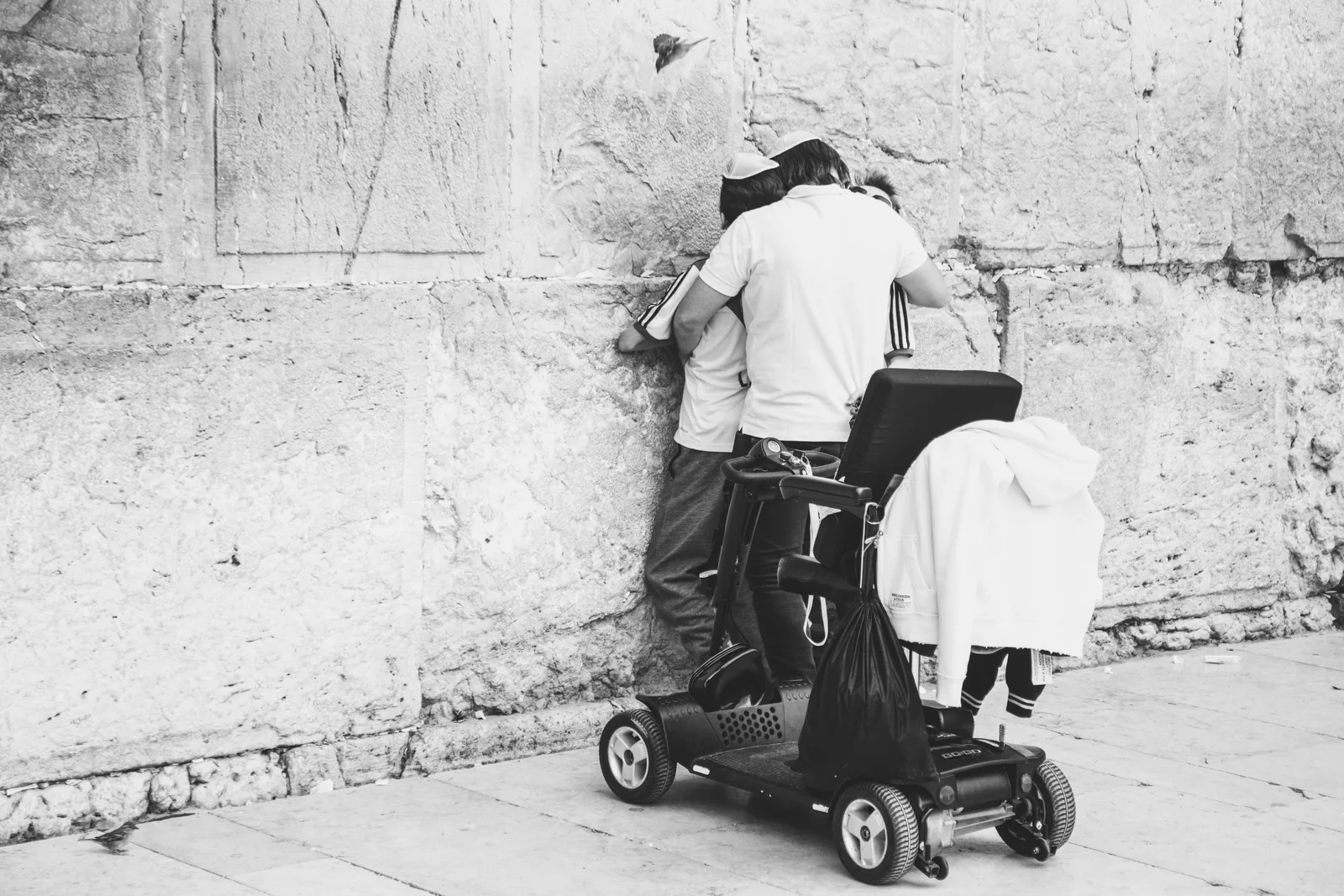
Street photography does not document only a moment; it documents layers. In Jerusalem, the ancient stone and the contemporary person share the same space — at times the same frame. Time is not a straight line but an accumulation: past, present and memory exist simultaneously.
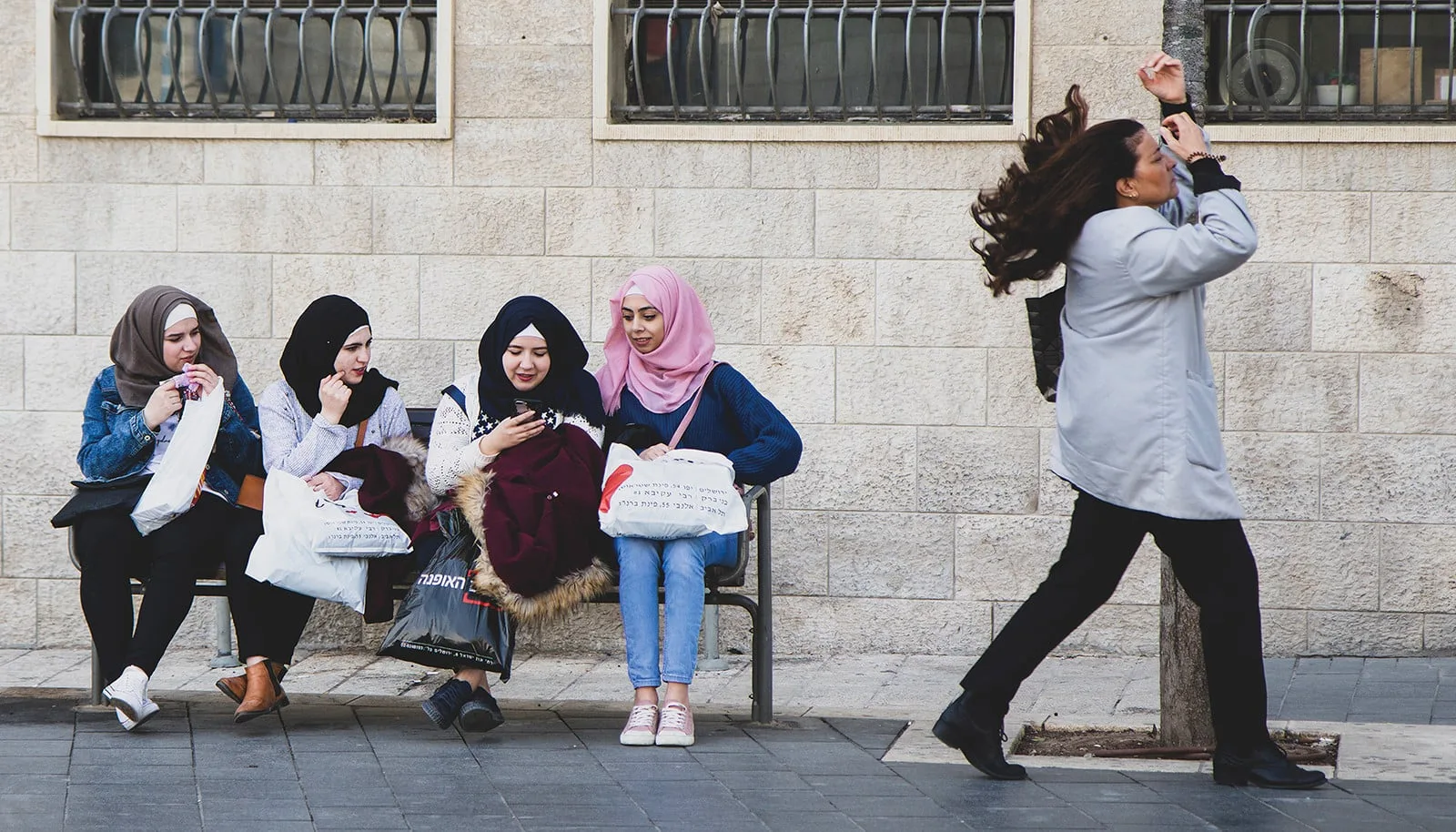
Street photography in Jerusalem is a complicated matter. The camera is present in a charged space: religions, identities, political tensions and social divides. And yet, within this complexity there are moments that do not seek to represent anything. Two nuns, a woman in a hijab with her children and a baby stroller, an ultra-Orthodox man — all at the same gate of the Old City, in the same moment, breathing in the smell of the same bagel.
The camera serves here as an observing instrument. It does not seek to decide or to beautify. It documents incidental moments, beauty and pain existing side by side. This is Jerusalem without makeup. A Jerusalem of flesh and blood.
A Native's Eye
The perspective presented here is that of a native son, from a family whose roots run generations deep in this city. It is a gaze formed by living in the city, not by visiting it. A gaze that rests on a continuous familiarity with the rhythm of the street, with slow changes and recurrences, with people who pass through and people who stay.
My dear grandfather, of blessed memory, used to take me as a boy on a standing Saturday-morning walk through the alleys of the Old City. I remember how merchants would rise in his honor, welcoming him with a warm embrace and spoiling me with sweets and soda.
My beloved father, whom I remember above all working hard, with diligence and devotion, taught me the secrets of the market. He knew how to speak to every person in the special slang of 1970s and 1980s Jerusalem; there wasn't a merchant who didn't know and respect him.
And my beloved mother, who always tried to protect me from all the bad things that can happen in this city — she is the one who taught me to love Jerusalem in spite of its flaws.
The Book Born Out of the War
This journey was for me far more than editing; it was a lifeline. After the difficult documentation of Kfar Aza in October 2023 and the work on the exhibition "Holocaust in the Village," I withdrew into the studio for two years. The work on Jerusalemites saved me from the noise of the war, and it was the need to complete the book that drew me back out into the street for the first time at the end of 2025 and the beginning of 2026.
What's in the Book
The book was built with great care, like intricate craftwork. Beyond the collection of photographs, it holds layers that reveal themselves through the relationship between the images and the narrative sequence. Connections that move between the geometric and the visual and the conceptual, critical statement.
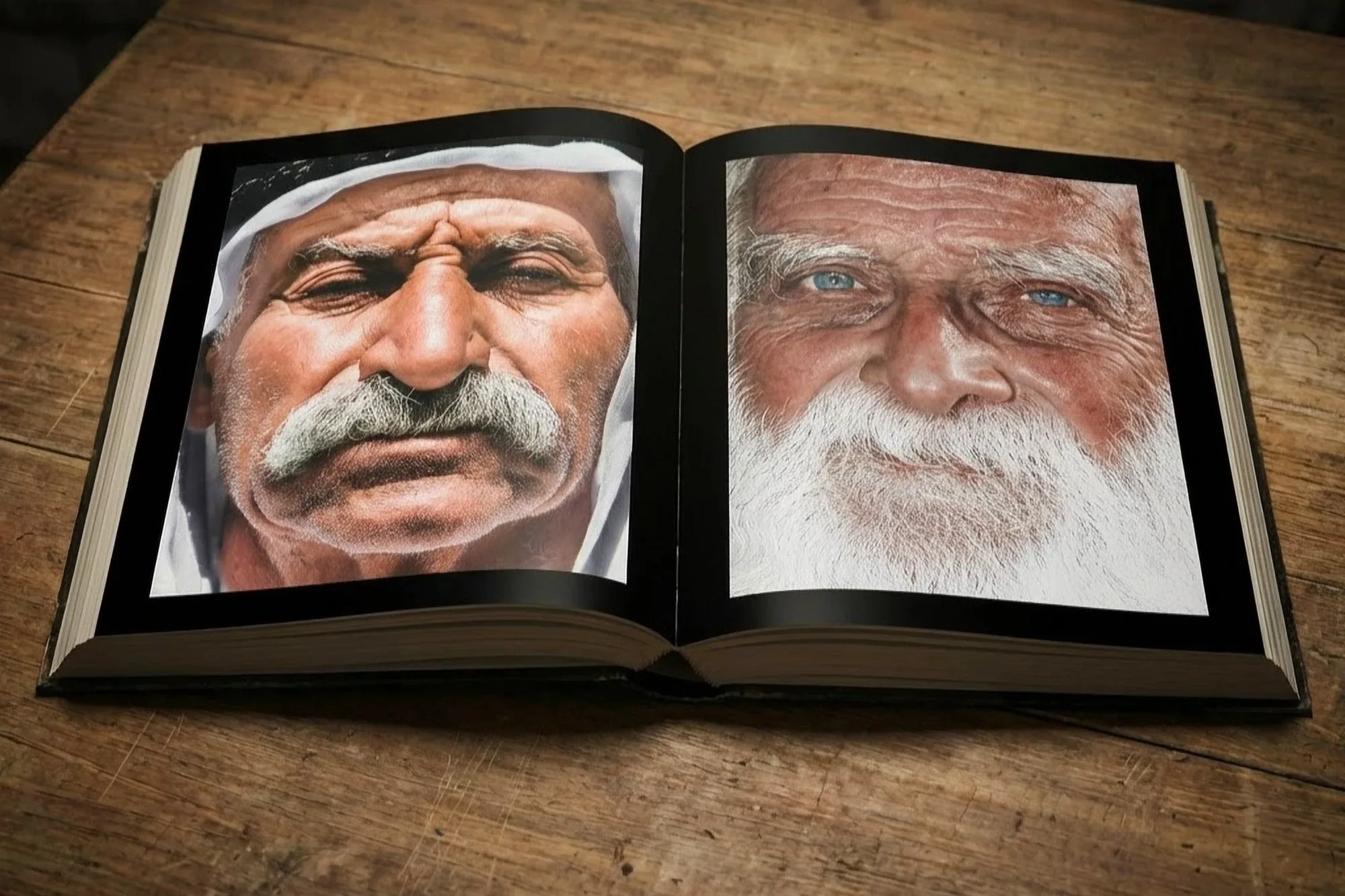
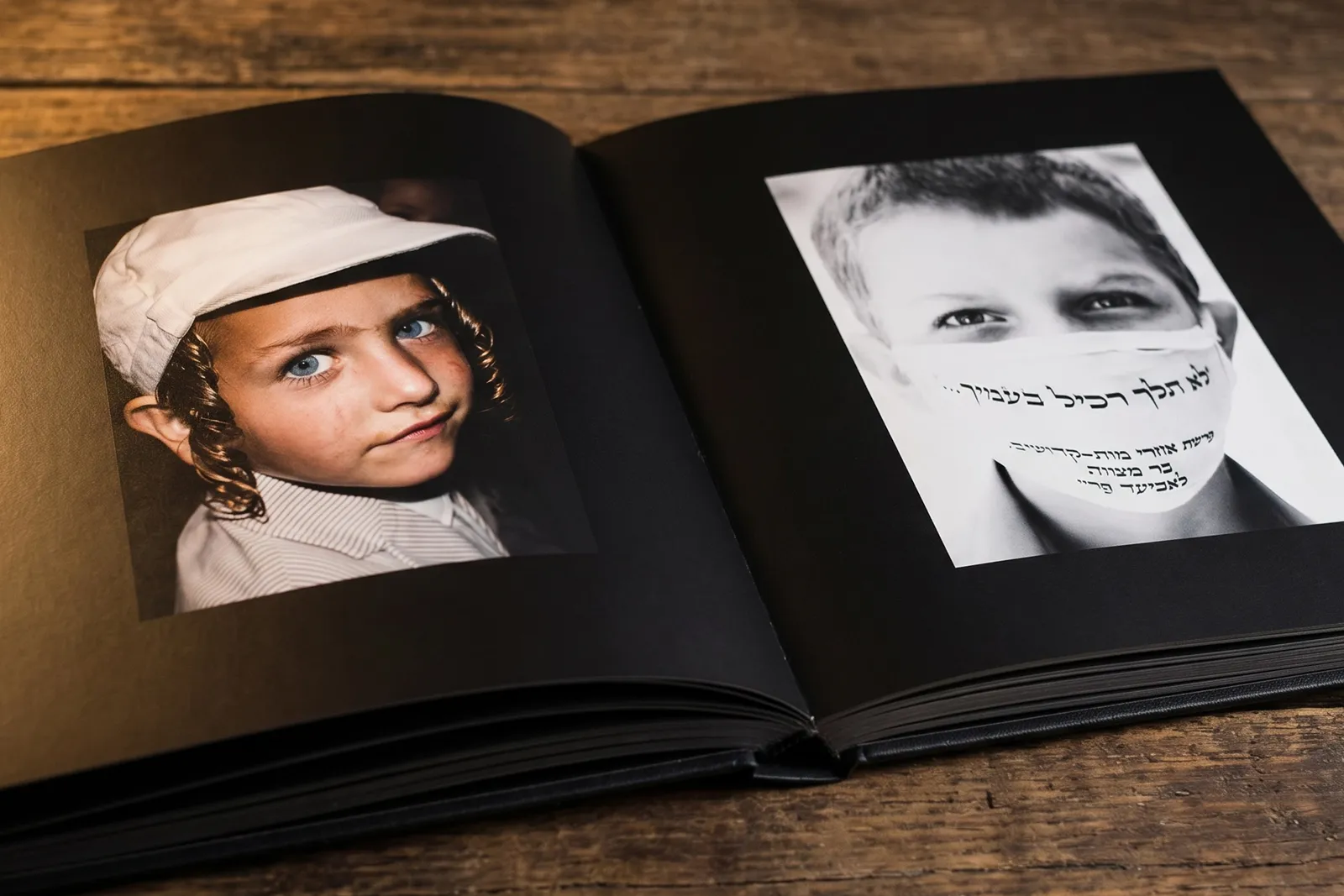 A look inside the book — a spread from Jerusalemites (mockup)
Aner Shapira's Handwriting
The Hebrew lettering in Jerusalemites — throughout the book, and including the title on the cover — is set in a typeface made from the handwriting of the late Aner Shapira, a musician and soldier, a son of Jerusalem, through the "Ot Chaim" initiative.
On October 7, Aner stood at the entrance of a crowded roadside shelter near the Nova festival and threw back, one after another, seven grenades hurled inside — saving many lives. The eighth took his. He was 22.
20% of the profits are donated to the Aner Shapira Foundation, with the blessing and consent of his parents.
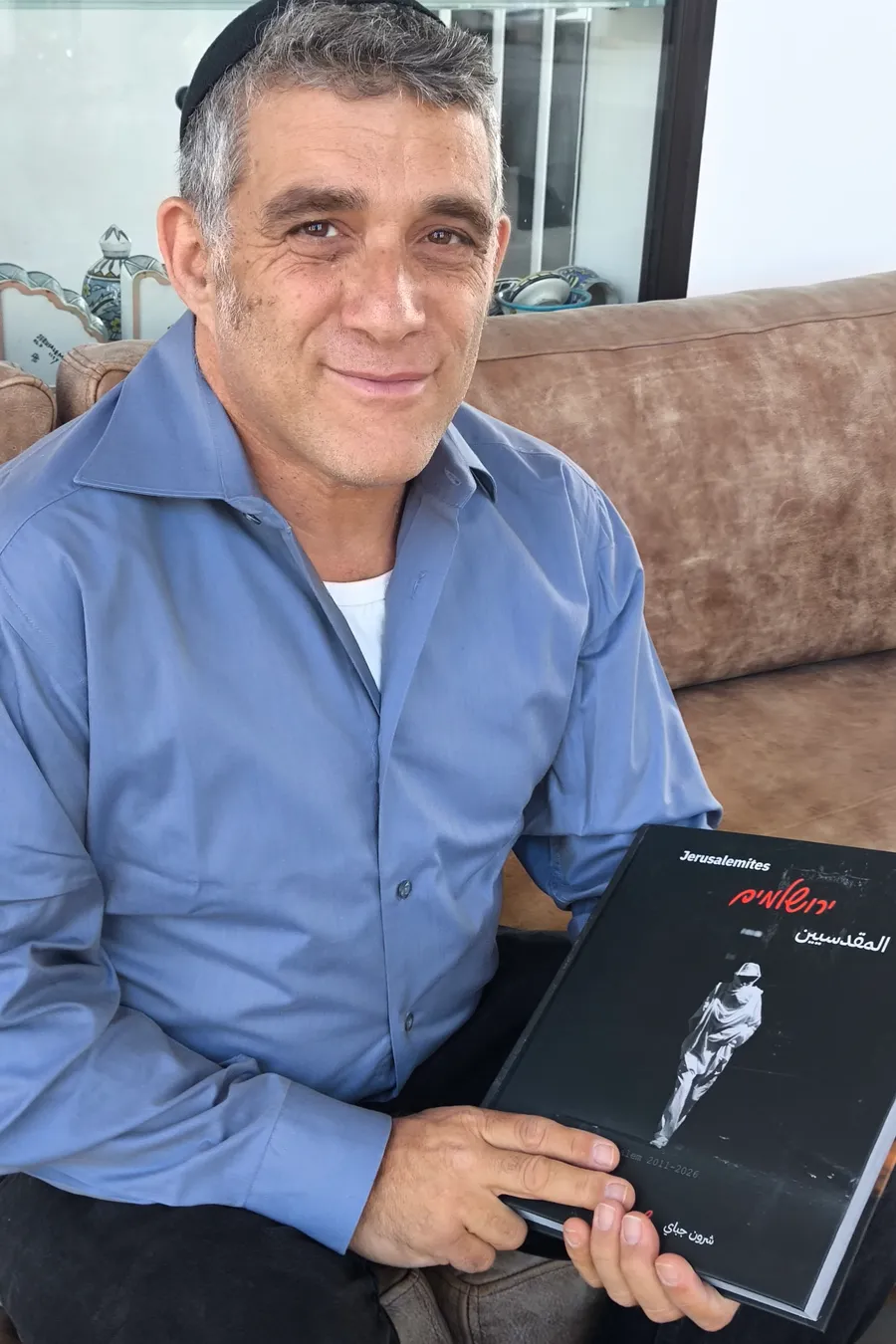 Aner's father with "Jerusalemites"
How the Narrative Sequence Was Built
The work of documentation is a matter of a split second, the instinct of a moment. But the work of selection proved a long, grueling journey, even more demanding than the photography itself. Over the past year I sat in front of the screen day after day, hours every day, trying to draw the precise image out of an archive of more than a million and a half moments caught in my lens over the past 15 years.
Facing that sea of material, I understood that it is truly impossible to find "the best ones." Letting go of certain images was as hard as a farewell, but the final selection was made out of an honest attempt to present Jerusalem as it really is: exposed, complex and human.
 A spread from the book: two worlds on the same street (mockup)
The Endorsements, the President and the Ambassador
President Isaac Herzog's blessing, U.S. Ambassador Mike Huckabee's letter of recommendation and every endorsement of the book are gathered on the “Jerusalemites” book page — along with the footage of the meeting at the President's Residence.
The full list of libraries holding the book, each with its catalogue record, is on the library holdings page.
The Book as a Jerusalem Gift
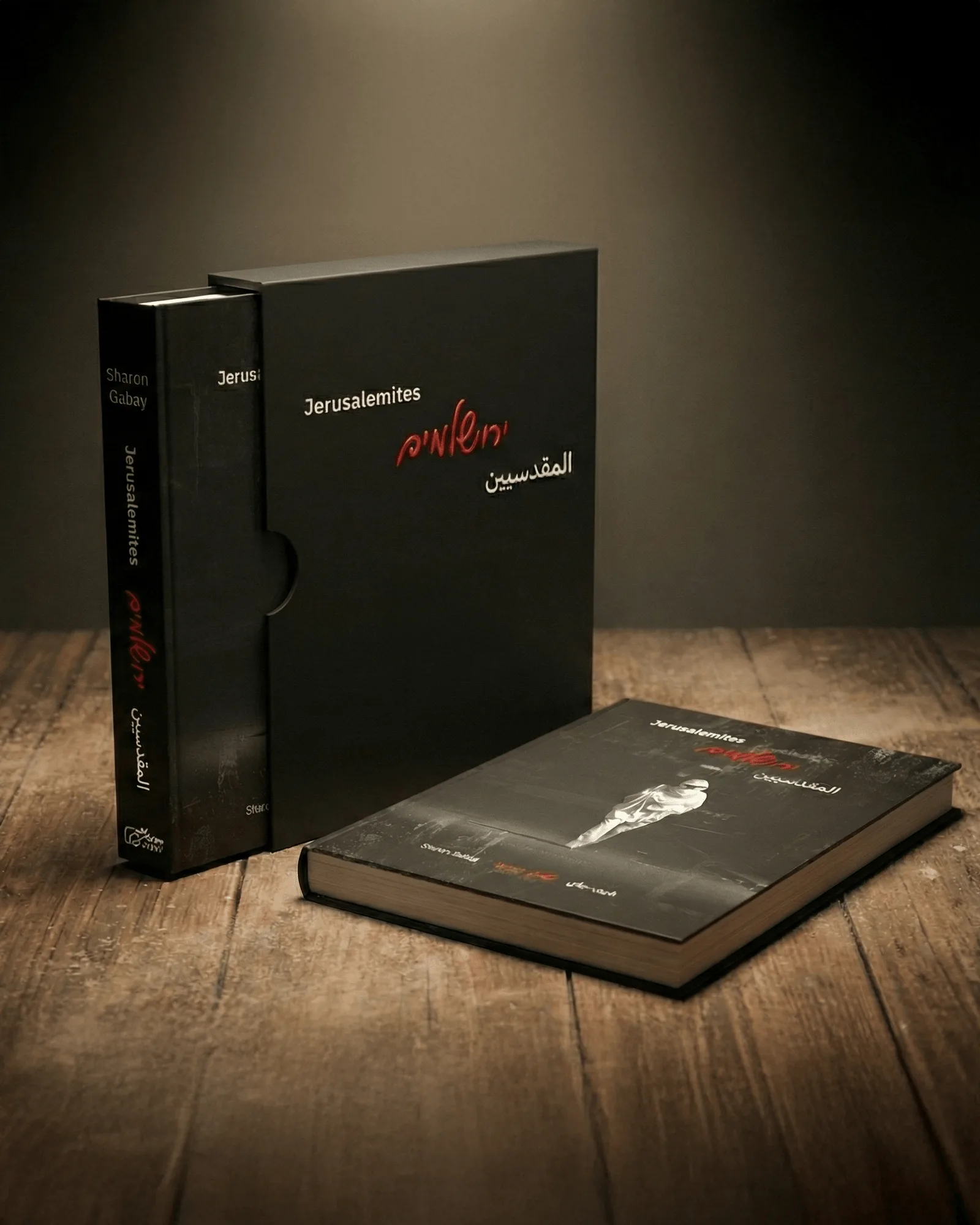
Jerusalemites has become the perfect Jerusalem gift for anyone who loves the city. Readers abroad who receive it feel they've been given a piece of the city. Diplomats, business leaders and heads of Jewish communities around the world already own it. Thanks to its three-language edition — Hebrew, English and Arabic — the book speaks to everyone. It makes a fitting gift for Jerusalem Day, for the holidays, for birthdays, for corporate events, and for anyone who wants to give something unique that you can't find on Amazon.
The Exhibition — 60 Years of a United Jerusalem
In 2027, Jerusalem marks 60 years since its reunification. For the occasion, Jerusalemites is offered to Jewish communities abroad not only as a book but as a complete cultural experience — a photography exhibition and book, ready to host.
The question behind it is a simple one: how do you celebrate Jerusalem, in a divided world, without dividing your own community? The answer isn't another story of triumph. It's a human one — the same gaze that underlies the book. Full details are on the dedicated page for communities abroad.
Who Stands Behind the Lens
Sharon Gabay was born and raised in the Nachlaot neighborhood of Jerusalem. Before he became a photographer, he worked for years in management and communications. At 38 he picked up a camera and went out into the street. He hasn't stopped since. Jerusalemites is his sixth photography book. His work has been exhibited at the United Nations building in New York, the U.S. Congress in Washington and the Israeli Knesset. His portraits serve as the lead images in dozens of Wikipedia entries for Israeli public figures — politicians, Israel Prize laureates, Nobel Prize winners and military commanders. His photographs are used in the public-diplomacy work of the Foreign Ministry and the Ministry of Tourism.
Technical Details: Format 28x25 cm, roughly 304 interior pages, 170 gsm matte chromo paper, hardcover with matte lamination, a trilingual edition — Hebrew, English, Arabic.
For the press: For a review copy, further details or to arrange an interview, contact sharongabay2@gmail.com directly.
To Purchase
Last signed copies, available on the site.
Frequently asked questions
- What is the book Jerusalemites about?
- Jerusalemites is a street-photography book documenting 15 years of shooting in the streets of Jerusalem. It turns the gaze away from the city's monumental symbols and toward its living human mosaic — people of every faith, culture and identity who share its streets.
- Who is Sharon Gabay?
- Sharon Gabay is an Israeli photographer born and raised in Jerusalem. For 15 years he has documented the city's streets. Jerusalemites is his sixth book. His work has been exhibited at the Knesset, the United Nations building and the U.S. Congress.
- What languages is Jerusalemites printed in?
- The book is a trilingual edition — Hebrew, English and Arabic.
- Where can I buy the book Jerusalemites?
- The book is available for purchase on the site, on the Jerusalemites book page.
- Who is the book Jerusalemites for?
- For anyone who loves street photography, Jerusalem, human documentary work and visual art. The book speaks a universal language — about a person in a city, about time and about memory.
- How much does Jerusalemites cost?
- The final signed and numbered copies of the First Edition are $165. The Second Edition is open for pre order at $120 instead of $149, with estimated delivery by December 31, 2026. Both are available in the official store on the site.
- Does Jerusalemites make a good gift?
- Absolutely. The book makes a fine gift for lovers of Jerusalem, photography and art. Thanks to its three languages it suits readers abroad as well. Many buy it as a gift for Jerusalem Day, for the holidays and for corporate occasions.
- Is Jerusalemites still available?
- Yes. The final signed and numbered copies of the first edition (numbers 1901 to 1998) are available now, and a Second Edition is open for pre order with estimated delivery by December 31, 2026.
- What are the technical specifications of Jerusalemites?
- Format 28 by 25 centimeters, 304 pages, 170 gsm museum-quality matte chromo paper, hardcover with matte lamination. A trilingual edition in Hebrew, English and Arabic.
- Where has Sharon Gabay's work been exhibited?
- His work has been shown at the United Nations building in New York, the U.S. Congress in Washington, the Israeli Knesset, and in galleries and institutions in Israel and around the world.
- What is the connection between Jerusalemites and Aner Shapira?
- The Hebrew lettering throughout the book, including the title on the cover, is set in a typeface made from the handwriting of the late Aner Shapira — a musician and soldier, a son of Jerusalem, who fell on October 7 while throwing back grenades from the entrance of a crowded shelter near the Nova festival, saving many lives — through the Ot Chaim initiative. 20% of the profits are donated to the Aner Shapira Foundation, with the blessing and consent of his parents.
- Can our community host the Jerusalemites exhibition?
- Yes. Ahead of 2027, when Jerusalem marks 60 years since its reunification, Jerusalemites is offered to communities abroad as a complete cultural experience — a photography exhibition and book, ready to host. Details are on the dedicated page for communities.

Written by
Sharon Gabay
Portrait, headshot & fine-art photographer · author of six photography books
More about Sharon Gabay →Related articles
Ready for a photo that works for you?
Tell me what you need and we'll find the right format together. We can shoot in my professional studio, or I'll come to you with a full mobile studio — anywhere in Israel.