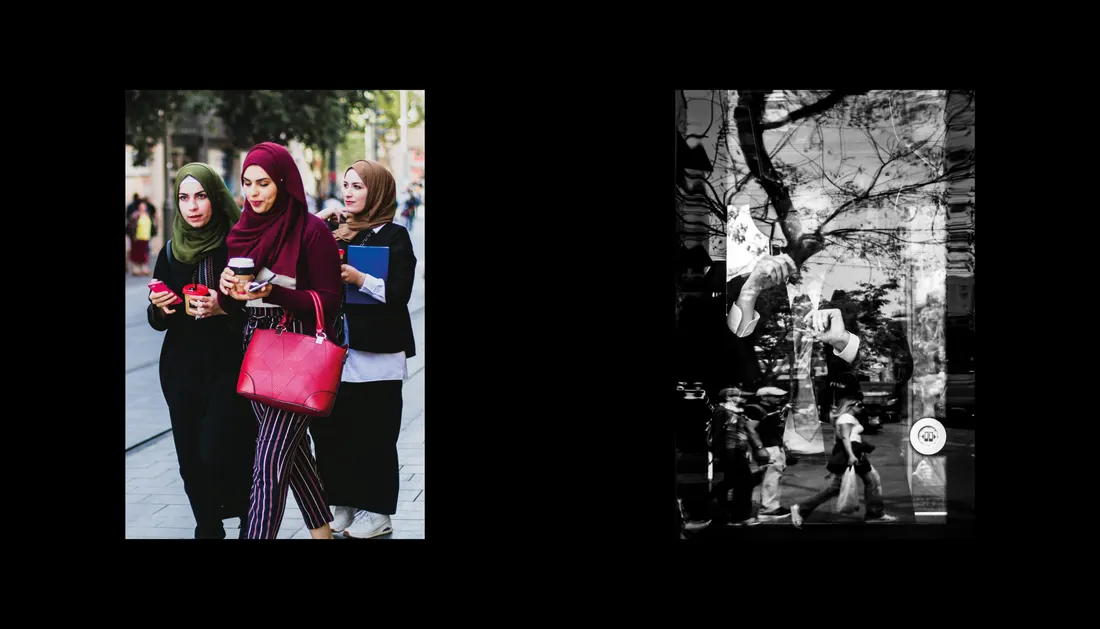
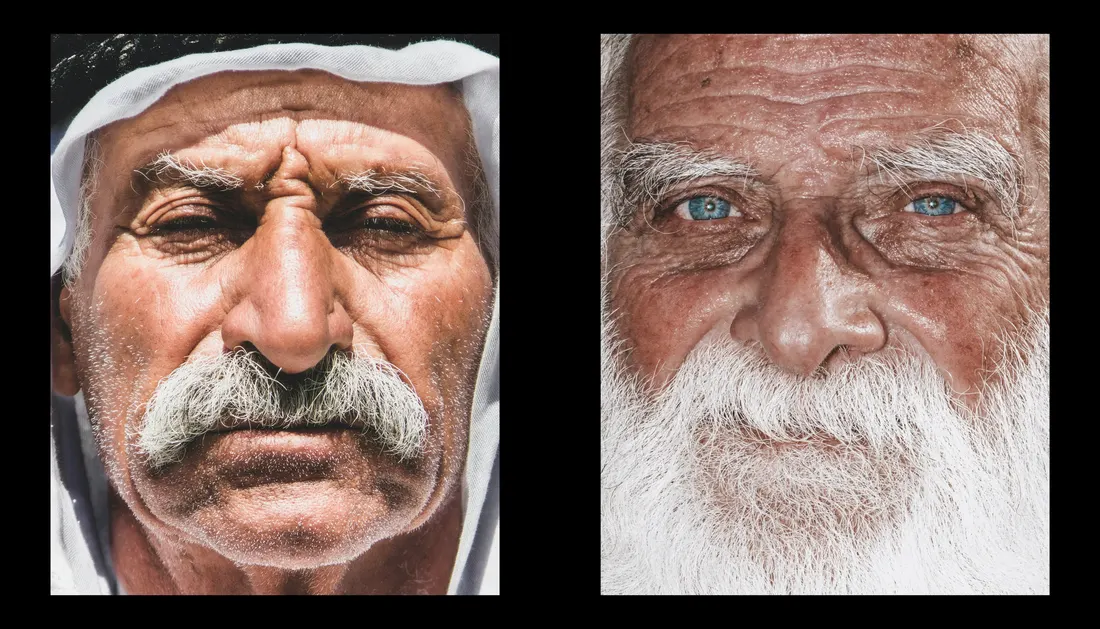
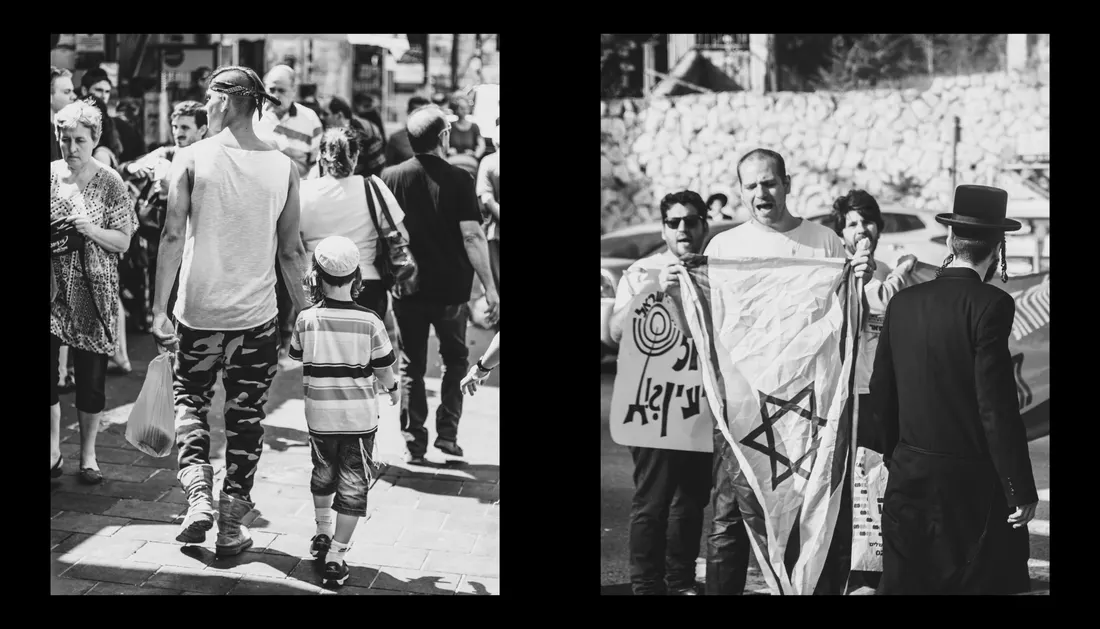
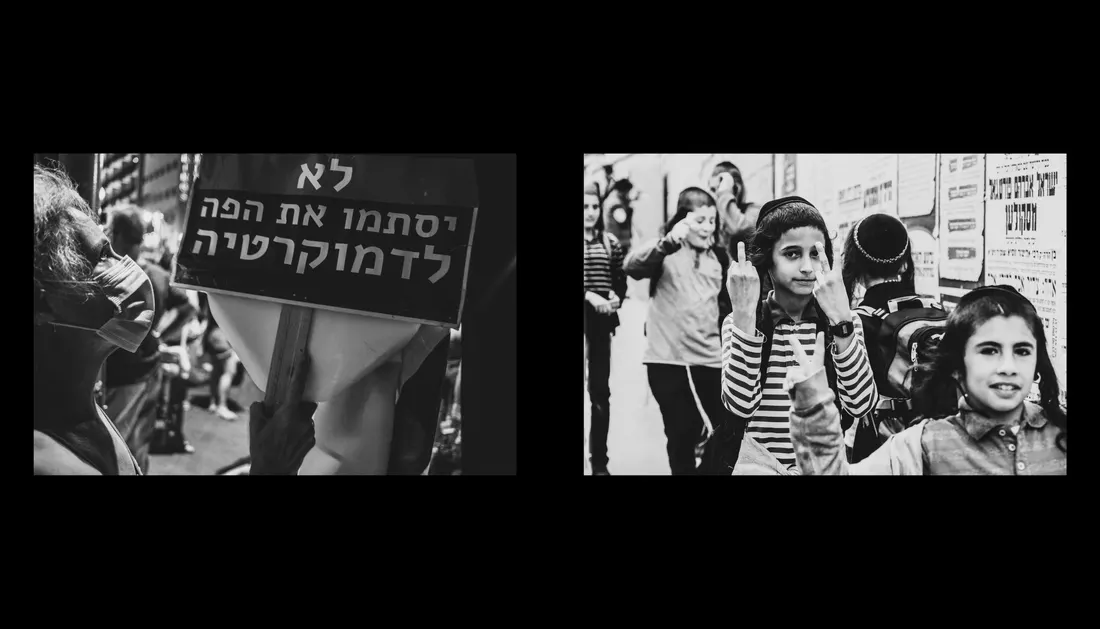
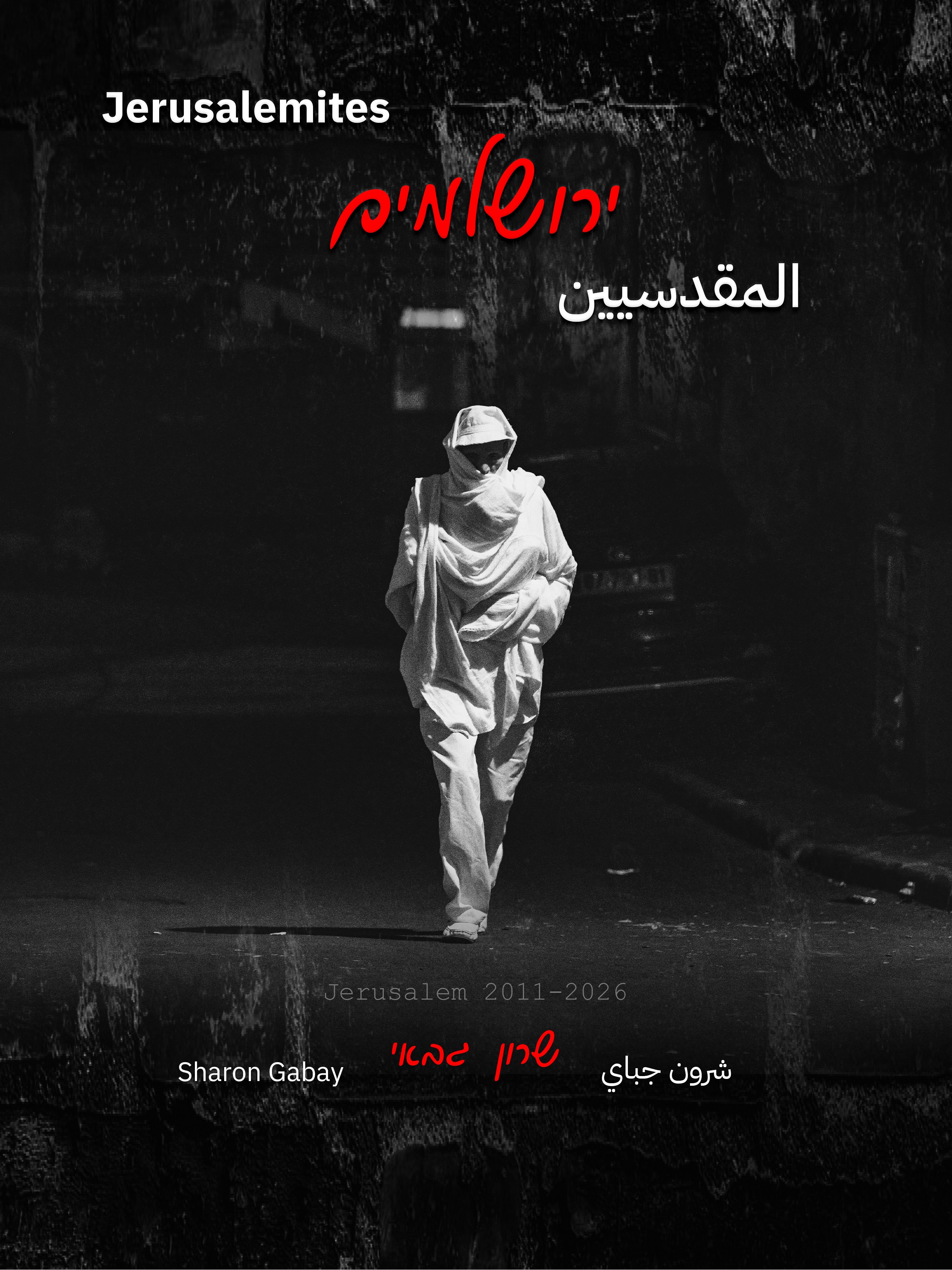
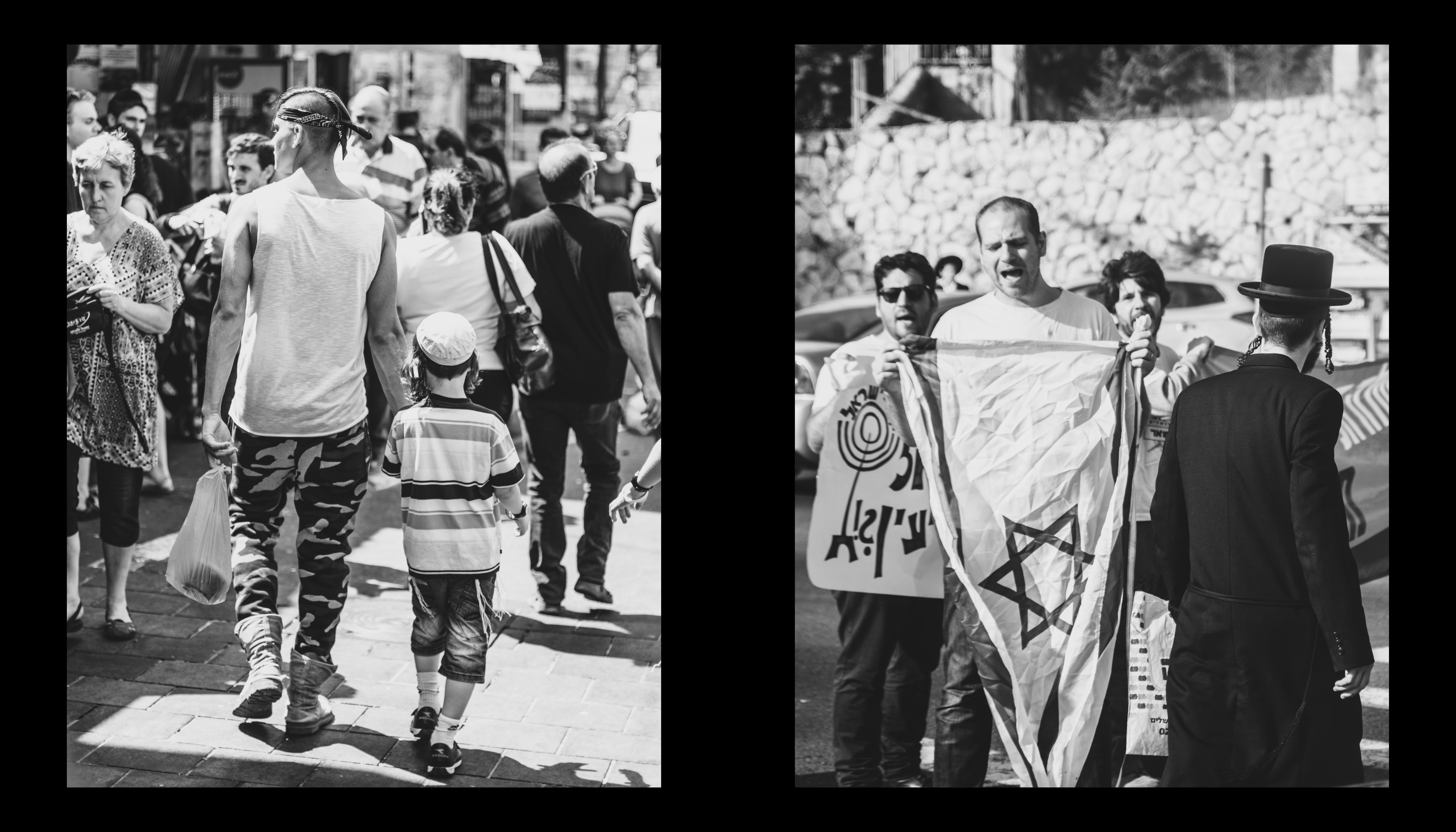
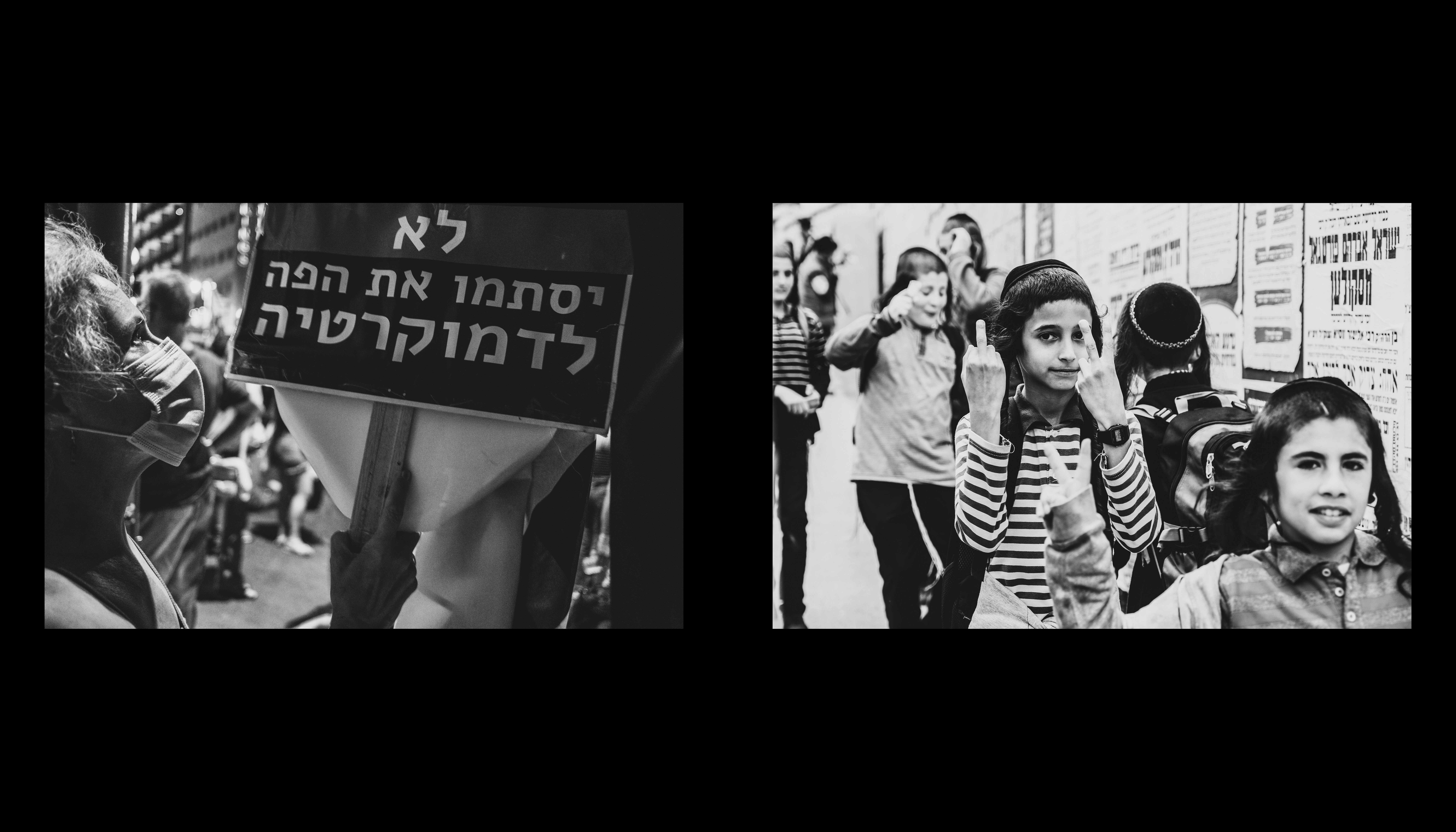
Fifteen years, one camera, one city — Jerusalemites: a visual essay on the human mosaic of Jerusalem.
For fifteen years Sharon Gabay wandered the streets of Jerusalem with no planned script. He did not wait for the "right" moment and never staged a single frame. His quiet presence — in the market at dawn, in Mea Shearim on a Friday evening, or on the Mount of Olives on an ordinary weekday — produced a documentary archive of a human mosaic the tour guides never show.
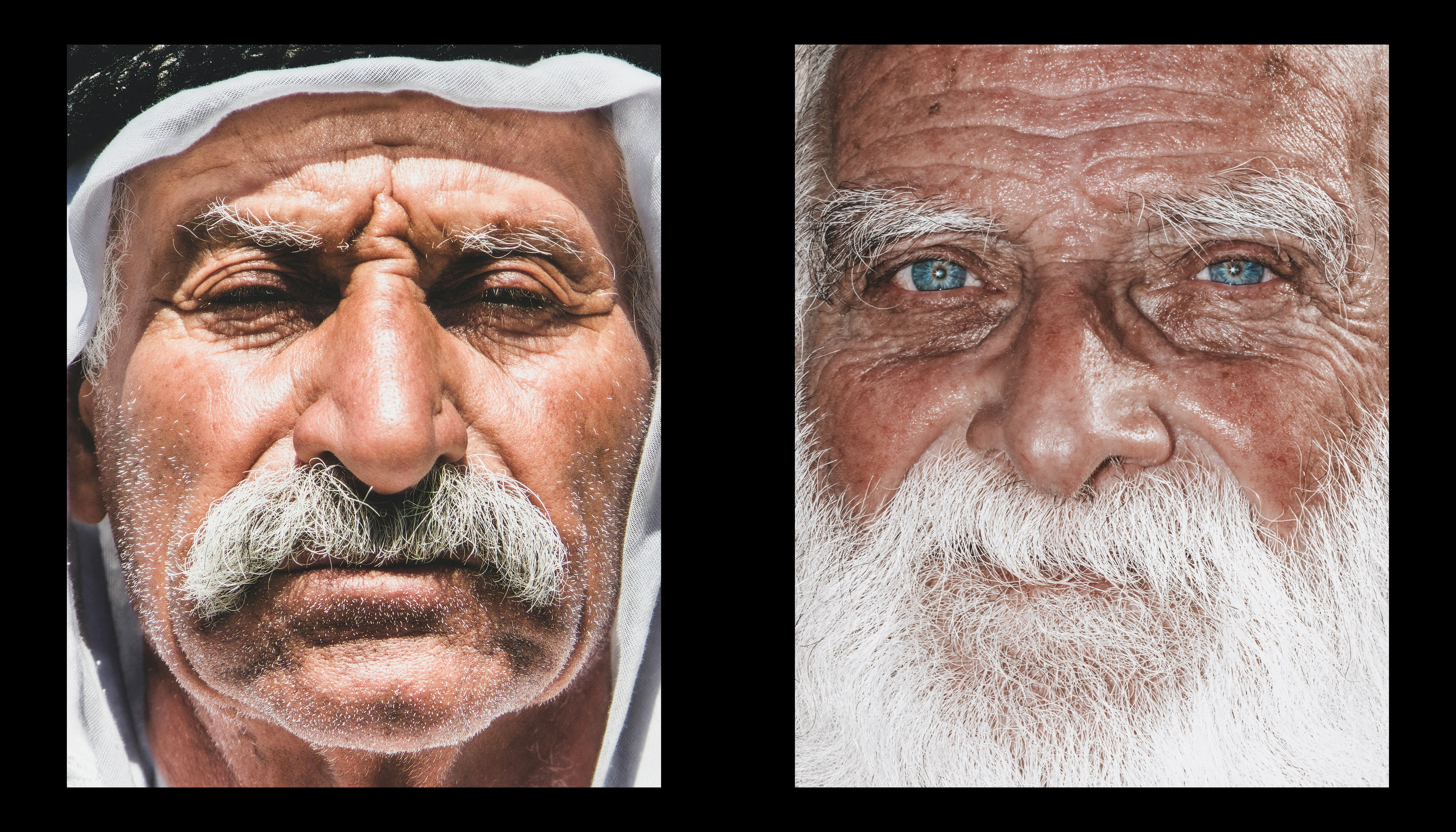
Out of a million and a half photographs, roughly 300 images were carefully selected to distill the essence of the city. The result is not a Jerusalem of stone and sanctity, but a city of flesh and blood, where ultra-Orthodox Jews, Arabs, nuns, merchants and children share one space — often without knowing of one another. A humanist, non-judgmental gaze that tells the city's story through the faces of those who live it.
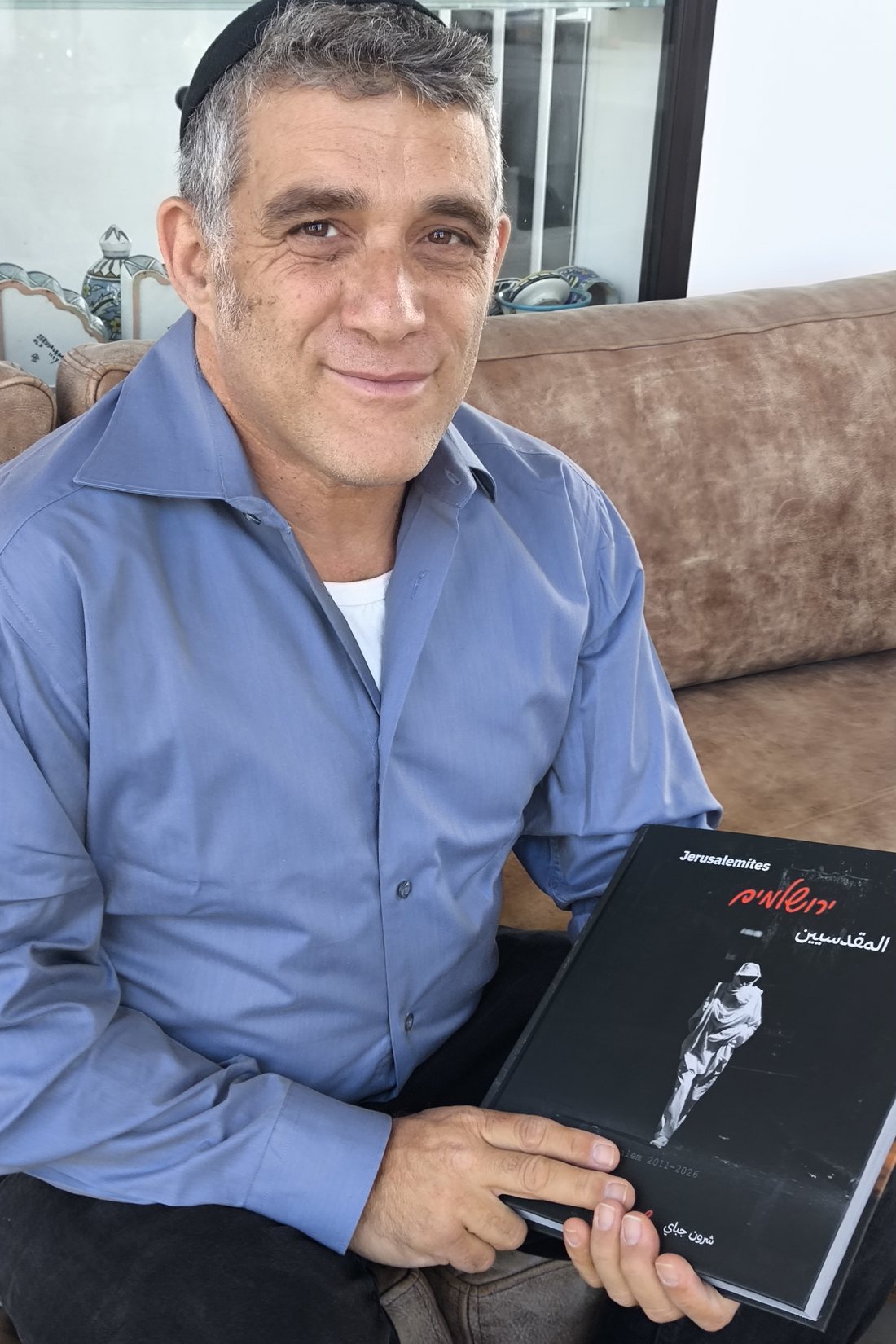
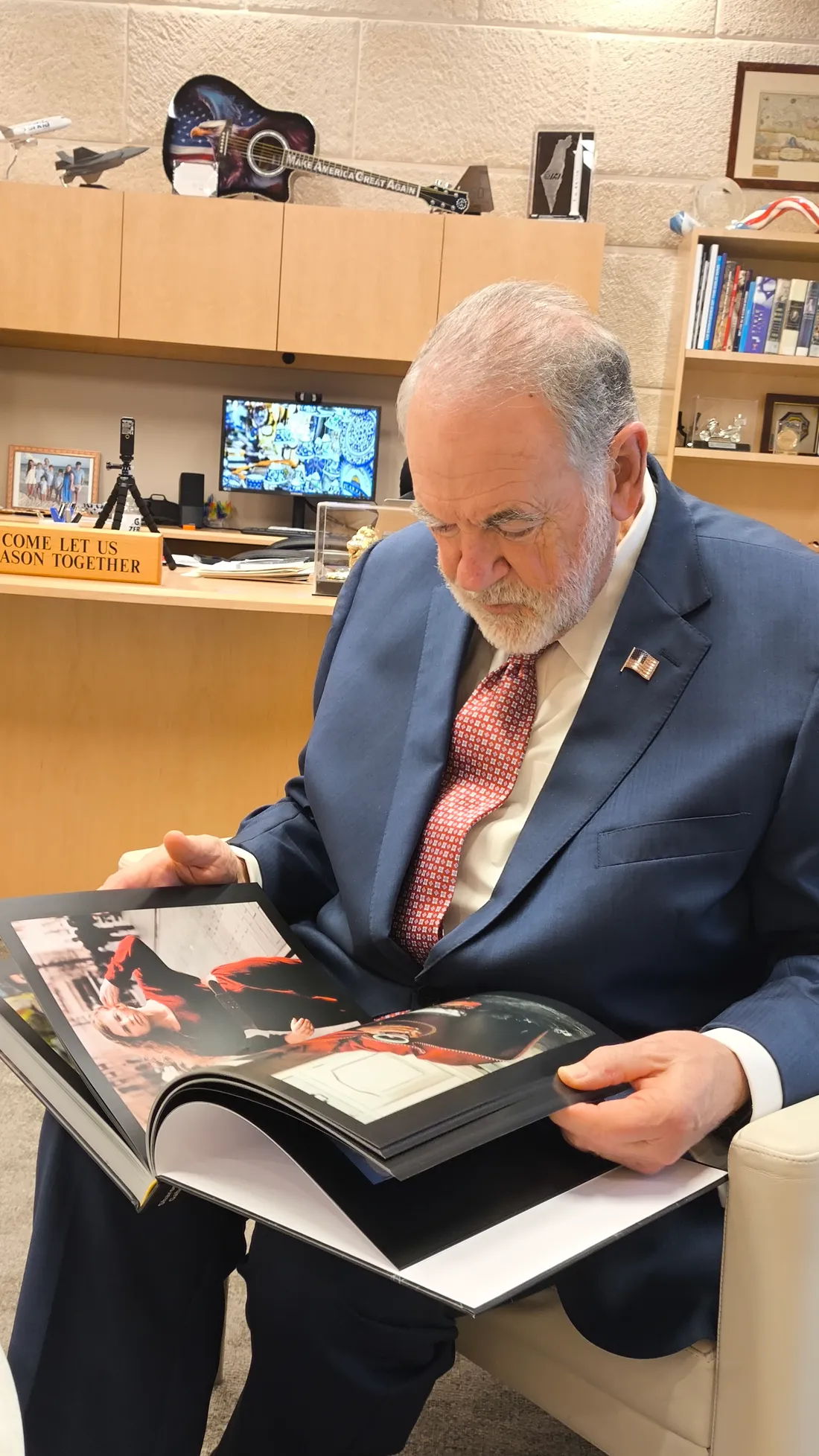
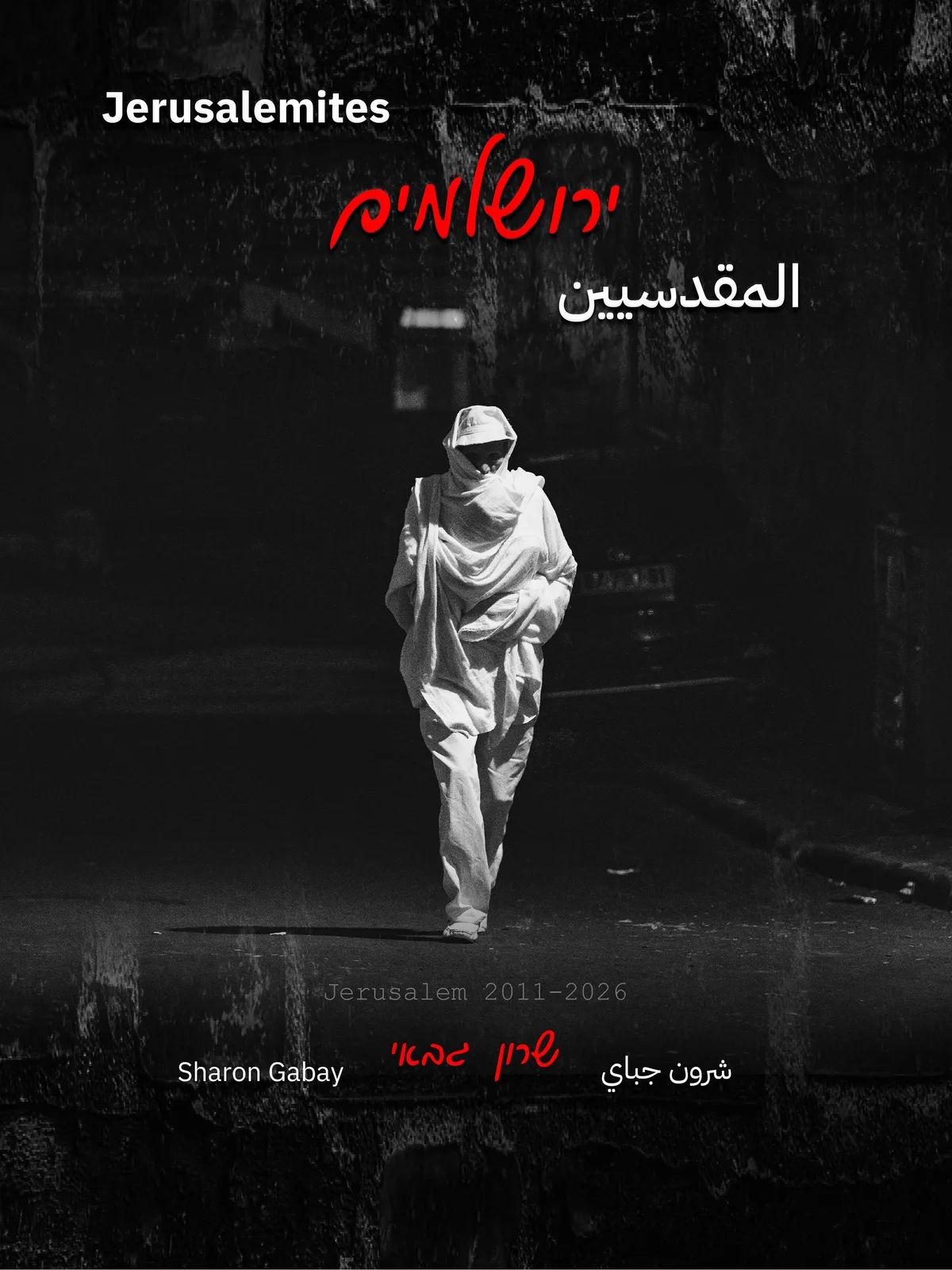
Jerusalemites (2026) is a trilingual edition (Hebrew, English and Arabic) in a museum-grade format (28×25 cm), with 304 interior pages, a hardcover binding and a slipcase. The book was published in a limited edition of 2,000 copies.
The Hebrew typography on the cover and inside the book is based on the handwriting of the late Aner Shapira (through the "Ot Hayim" memorial initiative) — a design choice meant to preserve his letters and return them to the streets on which they were written.
The book is officially registered in the permanent collections of the Library of Congress and the National Library of Israel (ISBN: 9789655977875).
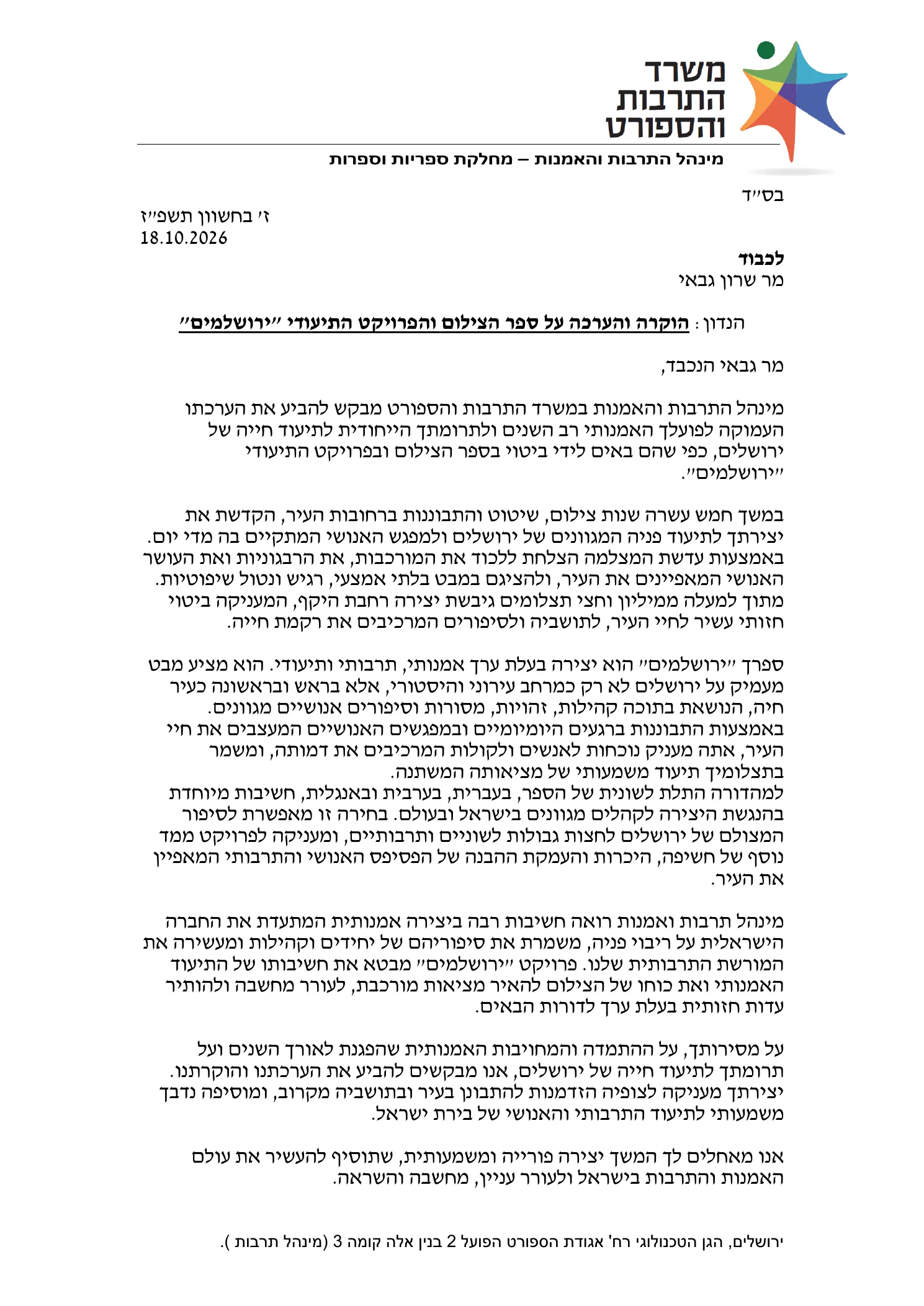
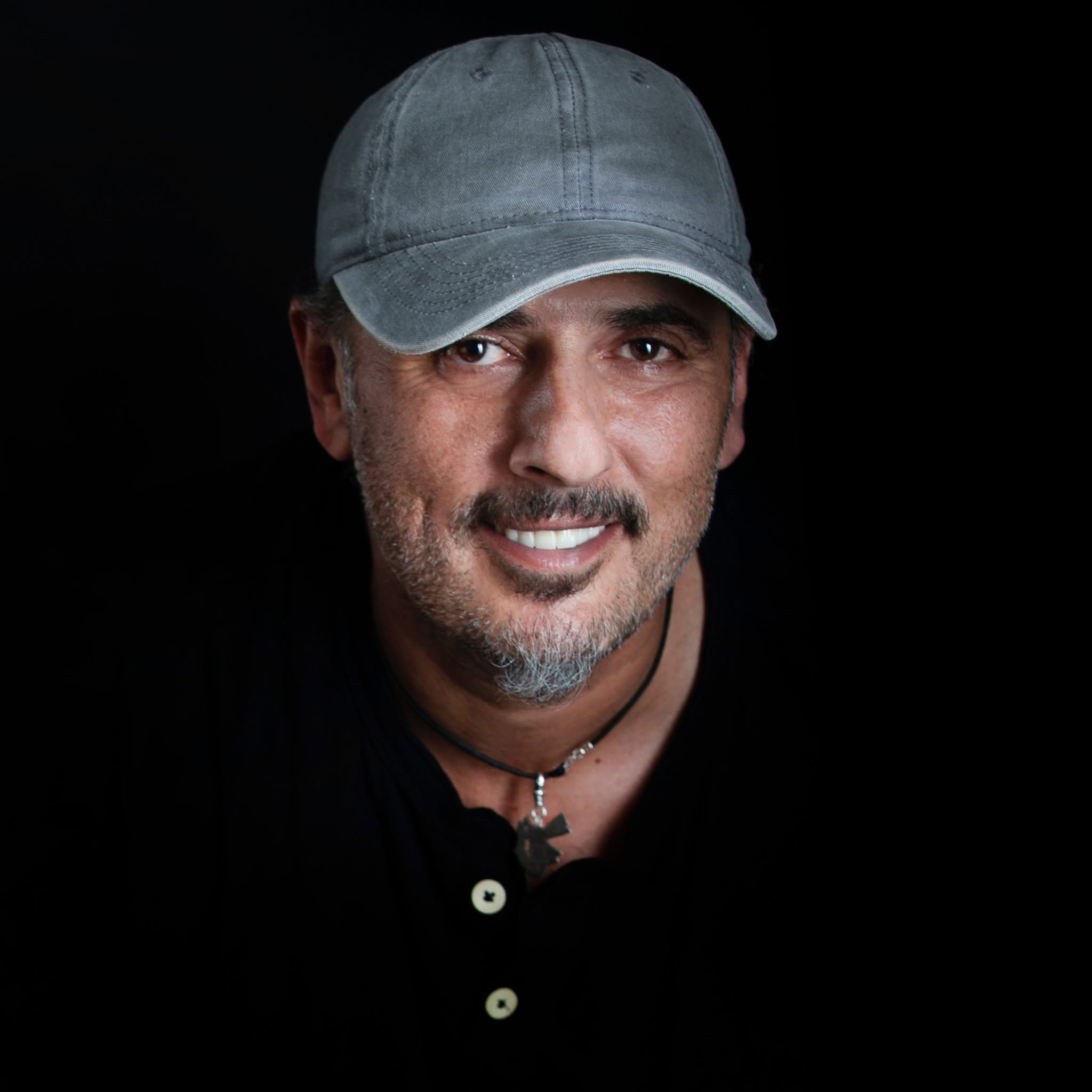
Sharon Gabay (b. 1974, Jerusalem) is an independent documentary, street and portrait photographer. Over his career he has published six photography books. His work has been shown in international solo exhibitions and official displays at the United Nations building in New York, the U.S. Congress in Washington and the Israeli Knesset. More than 350 of his photographs have been published on the official channels of Israel's Ministry of Foreign Affairs around the world. As a portrait photographer, he works with public figures, politicians and business leaders through a mobile studio operating across Israel.
Sharon Gabay was born and raised in the Nachlaot neighborhood of Jerusalem. Before becoming a photographer, he worked for years in management and communications. At 38 he picked up a camera and went out into the street. He hasn't stopped since. His portraits serve as the lead images in dozens of Wikipedia entries for Israeli public figures — politicians, Israel Prize laureates, Nobel Prize winners and military commanders. His photographs are used in the public-diplomacy work of the Foreign Ministry and the Ministry of Tourism.
Jerusalem is usually documented through its stones: the Western Wall, the spires, the walls. These images of the city — eternal, monumental — accompanied my previous books. This book seeks to shift the gaze from the symbols to the living fabric; from the myth to the reality.
The perspective presented here is that of a native son, from a family whose roots run generations deep in this city. It is a gaze formed by living in the city, not by visiting it. A gaze that rests on a continuous familiarity with the rhythm of the street, with slow changes and recurrences, with people who pass through and people who stay.
My dear grandfather, of blessed memory, used to take me as a boy on a standing Saturday-morning walk through the alleys of the Old City. I remember how merchants would rise in his honor, welcoming him with a warm embrace and spoiling me with sweets and soda.
My beloved father, whom I remember above all working hard, with diligence and devotion, taught me the secrets of the market. He knew how to speak to every person in the special slang of 1970s and 1980s Jerusalem; there wasn't a merchant who didn't know and respect him.
And my beloved mother, who always tried to protect me from all the bad things that can happen in this city — she is the one who taught me to love Jerusalem in spite of its flaws.
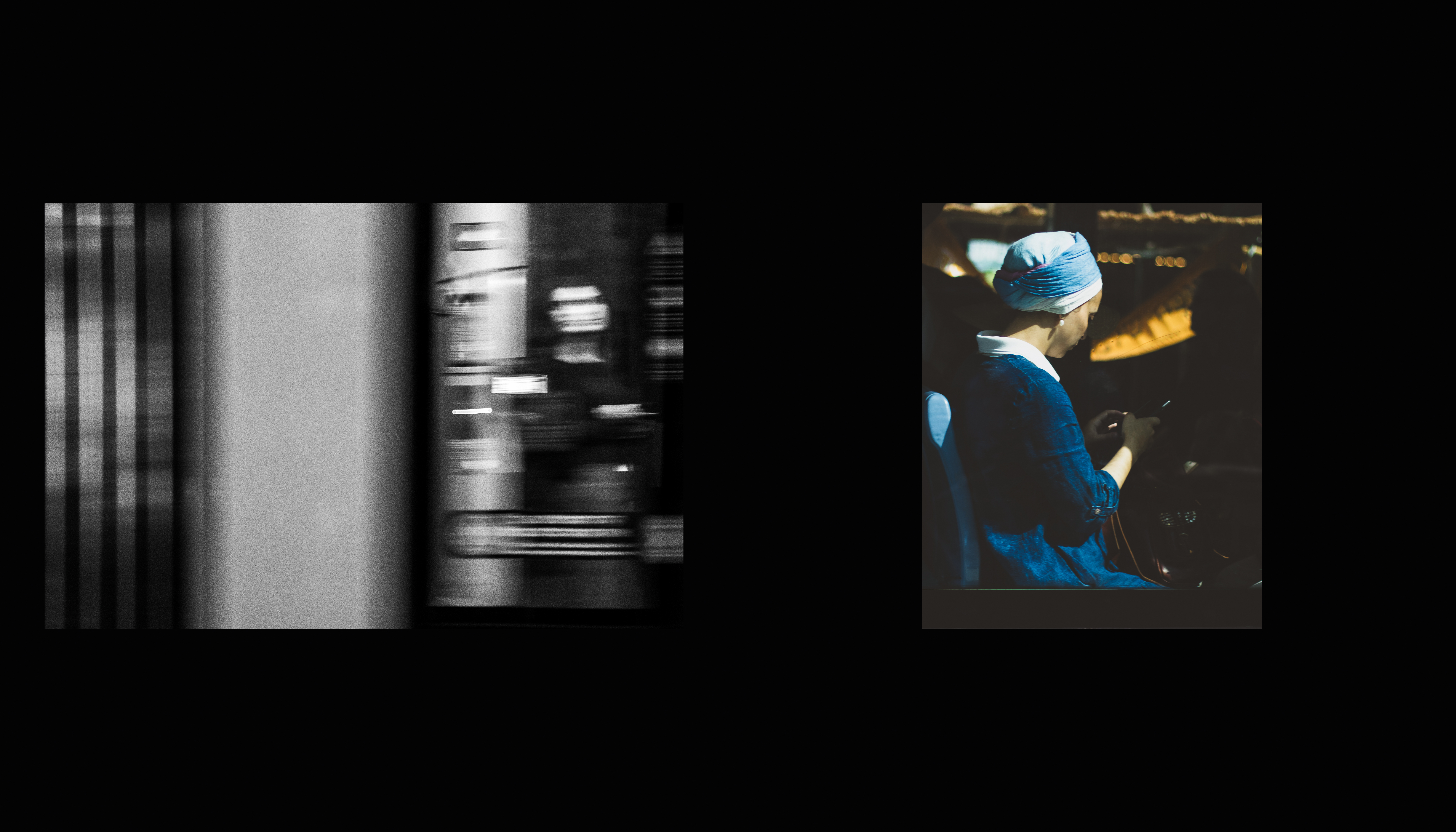
Street photography does not document only a moment; it documents layers. In Jerusalem, the ancient stone and the contemporary person share the same space — at times the same frame. Time is not a straight line but an accumulation: past, present and memory exist simultaneously.
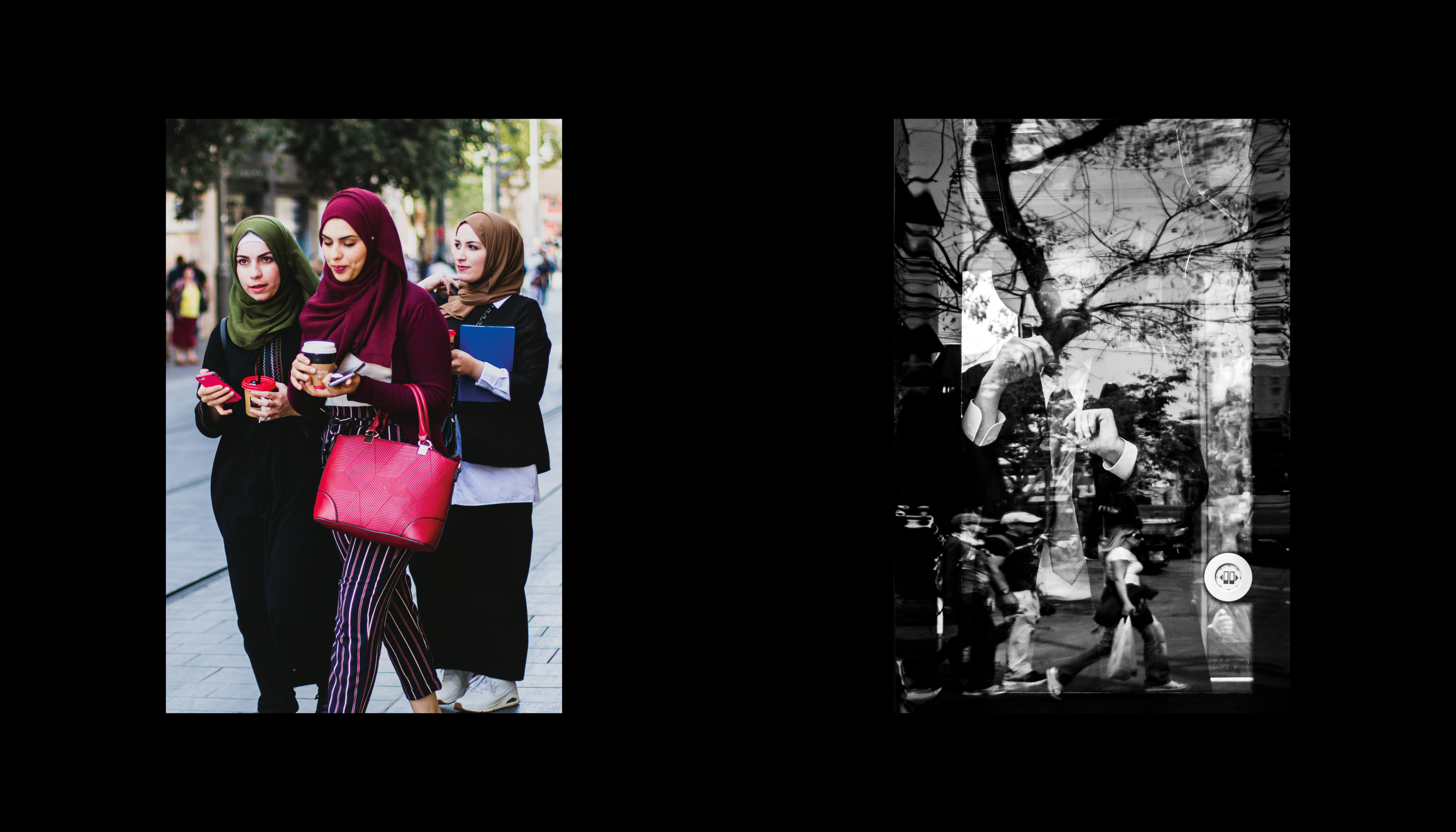
Street photography in Jerusalem is a complicated matter. The camera is present in a charged space: religions, identities, political tensions and social divides. And yet, within this complexity there are moments that do not seek to represent anything. Two nuns, a woman in a hijab with her children and a baby stroller, an ultra-Orthodox man — all at the same gate of the Old City, in the same moment, breathing in the smell of the same bagel.
The camera serves here as an observing instrument. It does not seek to decide or to beautify. It documents incidental moments, beauty and pain existing side by side. This is Jerusalem without makeup. A Jerusalem of flesh and blood.
The book was built with great care, like intricate craftwork. Beyond the collection of photographs, it holds layers that reveal themselves through the relationship between the images and the narrative sequence. Connections that move between the geometric and the visual and the conceptual, critical statement.
This book is the record of fifteen years. Not a one-time project, but an ongoing process of thousands of hours of walking, observing and waiting. An attempt to create a human archive of a city that changes and stays the same. A deeply local book that seeks to speak in a broad language. A book about Jerusalem — but also about a person in a city.
These are the Jerusalemites.
The work of documentation is a matter of a split second, the instinct of a moment. But the work of selection proved a long, grueling journey, even more demanding than the photography itself. Over the past year I sat in front of the screen day after day, hours every day, trying to draw the precise image out of an archive of more than a million and a half moments caught in my lens over the past 15 years.
This journey was for me far more than editing; it was a lifeline. After the difficult documentation of Kfar Aza in October 2023 and the work on the exhibition "Holocaust in the Village," I withdrew into the studio for two years. The work on Jerusalemites saved me from the noise of the war, and it was the need to complete the book that drew me back out into the street for the first time at the end of 2025 and the beginning of 2026. Facing that sea of material, I understood that it is truly impossible to find "the best ones." Letting go of certain images was as hard as a farewell, but the final selection was made out of an honest attempt to present Jerusalem as it really is: exposed, complex and human.
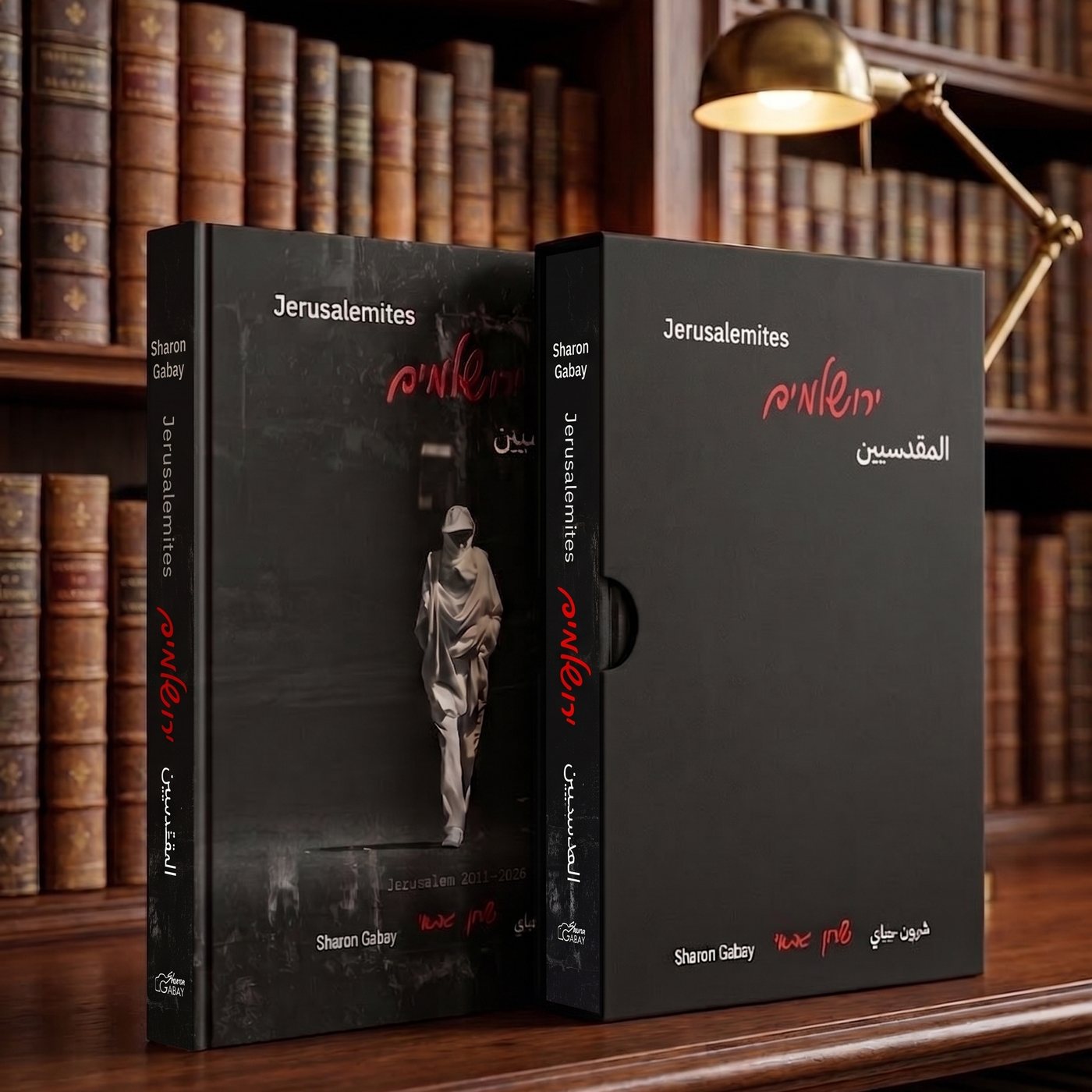
The Hebrew lettering in Jerusalemites — throughout the book, and including the title on the cover — is set in a typeface made from the handwriting of the late Aner Shapira, a musician and soldier, a son of Jerusalem, through the "Ot Chaim" initiative.
On October 7, Aner stood at the entrance of a crowded roadside shelter near the Nova festival and threw back, one after another, seven grenades hurled inside — saving many lives. The eighth took his. He was 22.
20% of the profits are donated to the Aner Shapira Foundation, with the blessing and consent of his parents.
"You are an amazing photographer. This thing is stunning in its beauty."
"Sharon doesn't photograph only the Western Wall, the walls and the stones, but the human fabric that gives Jerusalem its soul. Thank you, Sharon, for building a living archive of Jerusalem — not only as it looks, but as it feels."
"An important book without equal."
"A masterpiece. A work of art without equal."
"This book is stunning. A precise blend of Jerusalem — the landscapes, the people, the colors."
"The book is simply perfect. Deep, moving and aesthetic. A fresh look at Jerusalem unlike any I have seen."
"I have never seen a book like this about Jerusalem."
"The books are gorgeous! What an achievement and a gift to Jerusalem."
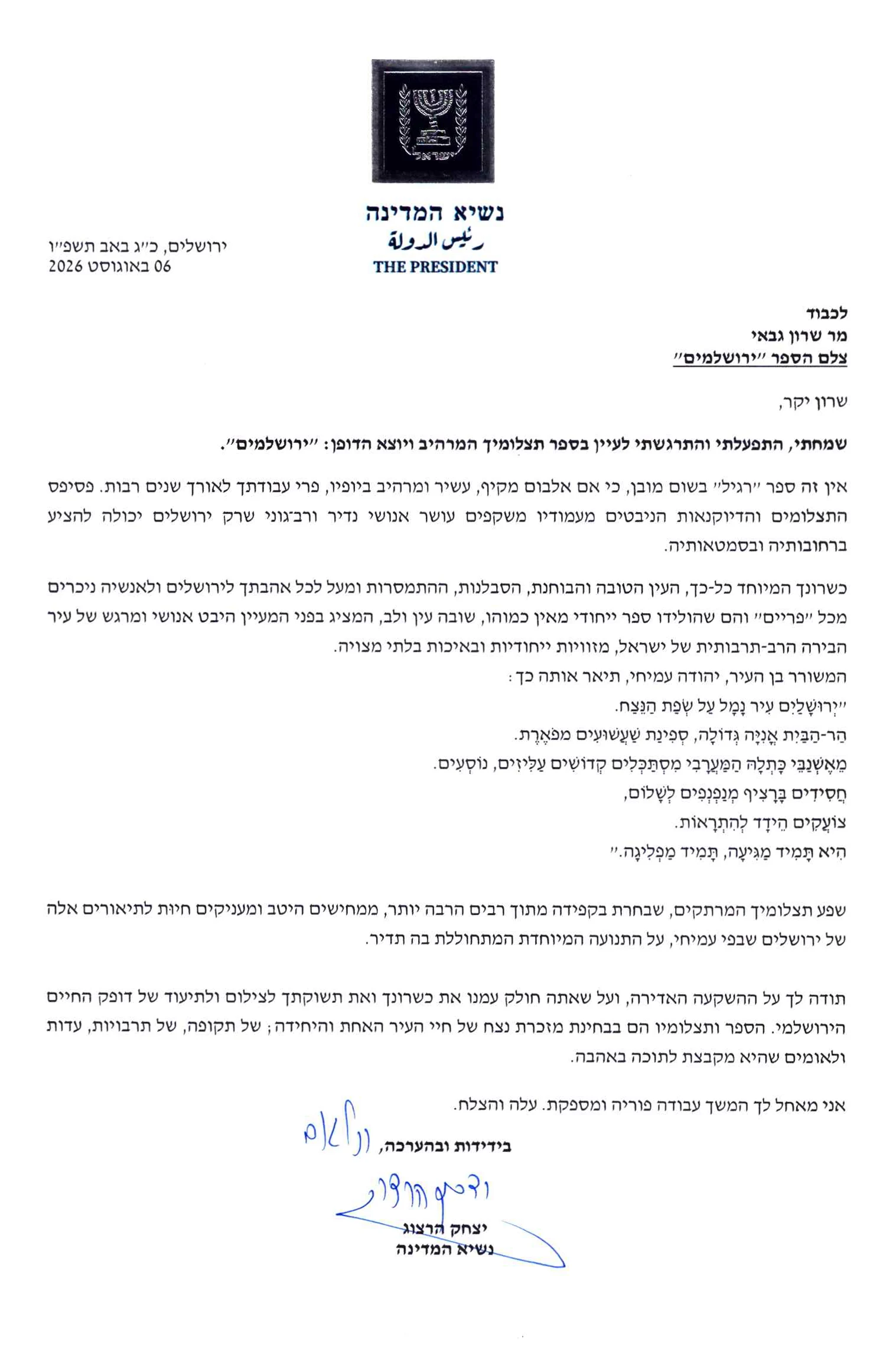
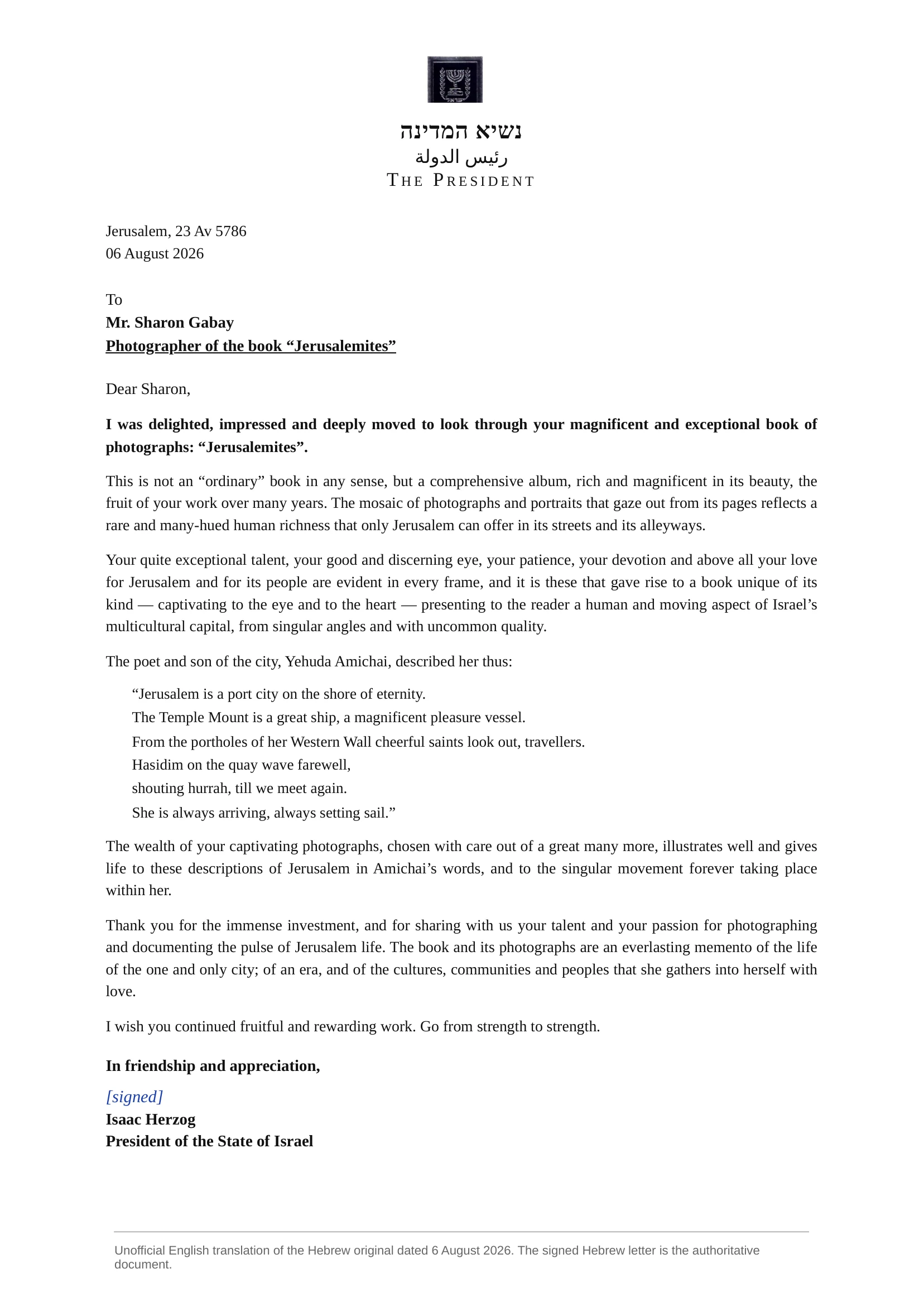
An official blessing from Israel's President Isaac Herzog for Jerusalemites, marking Jerusalem Day. (Video in Hebrew.)
"Thank you, dear Sharon Gabay, for this mission you carried out with talent, with professionalism, and above all with an immense love for Jerusalem."
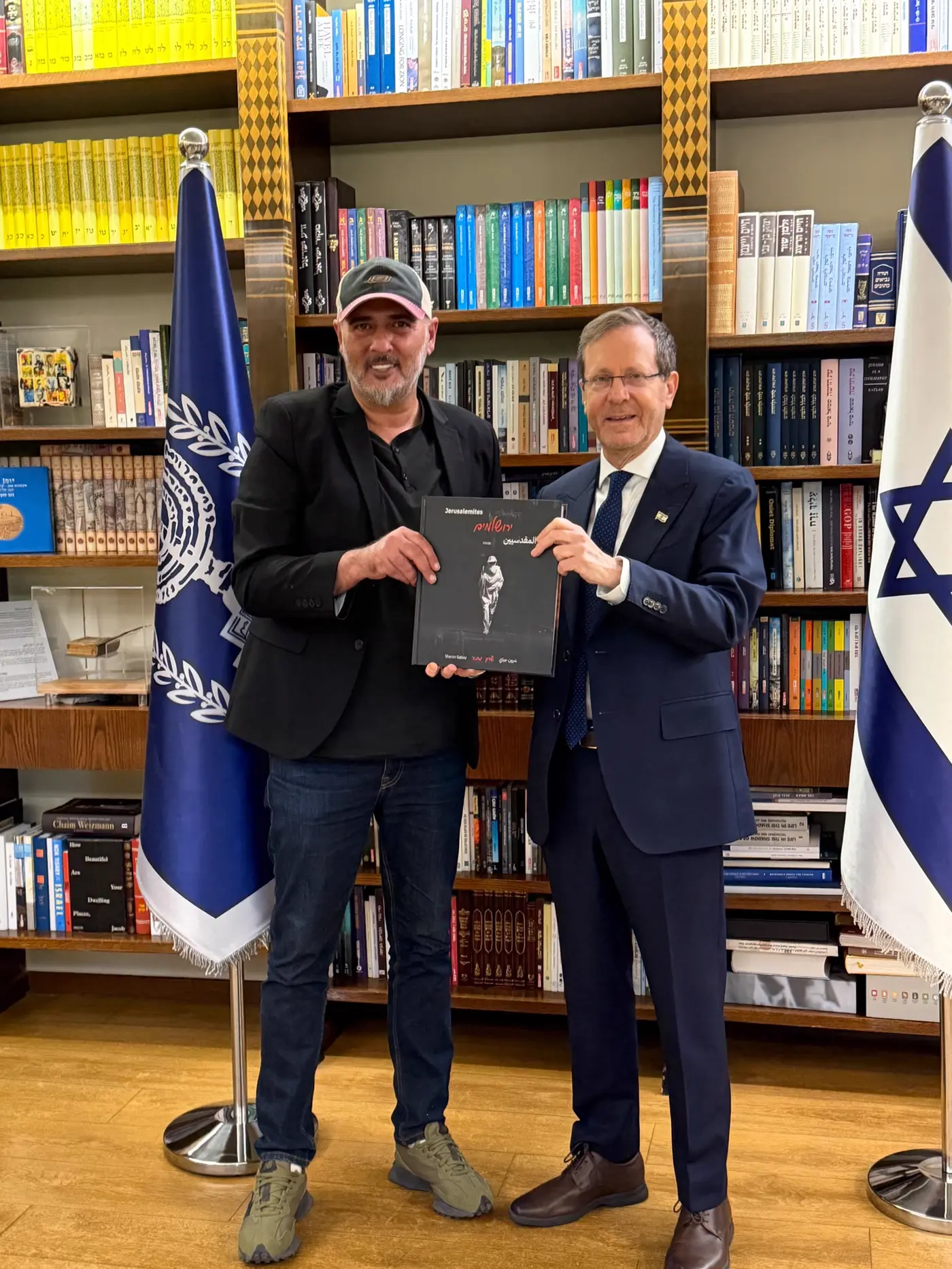
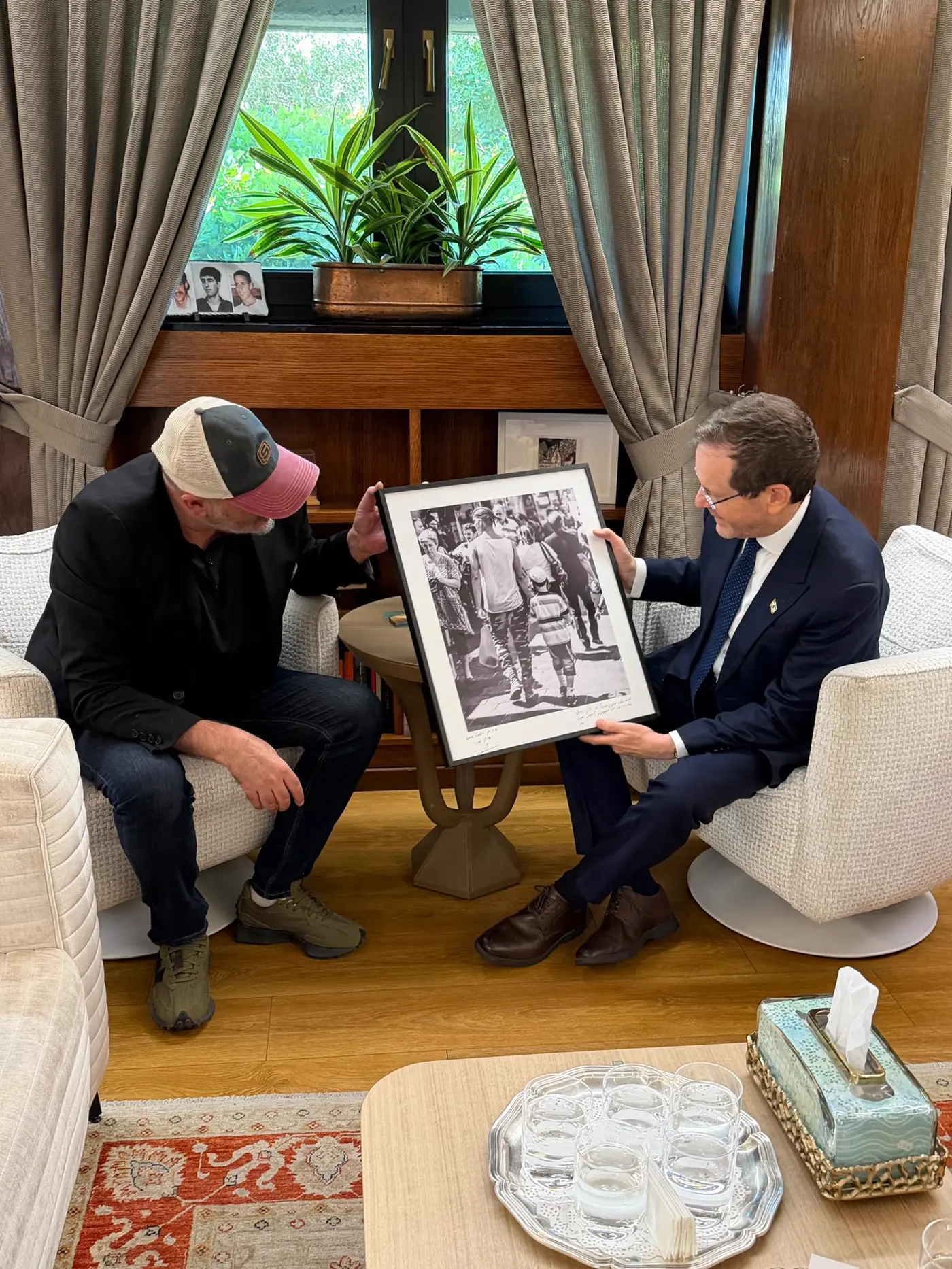
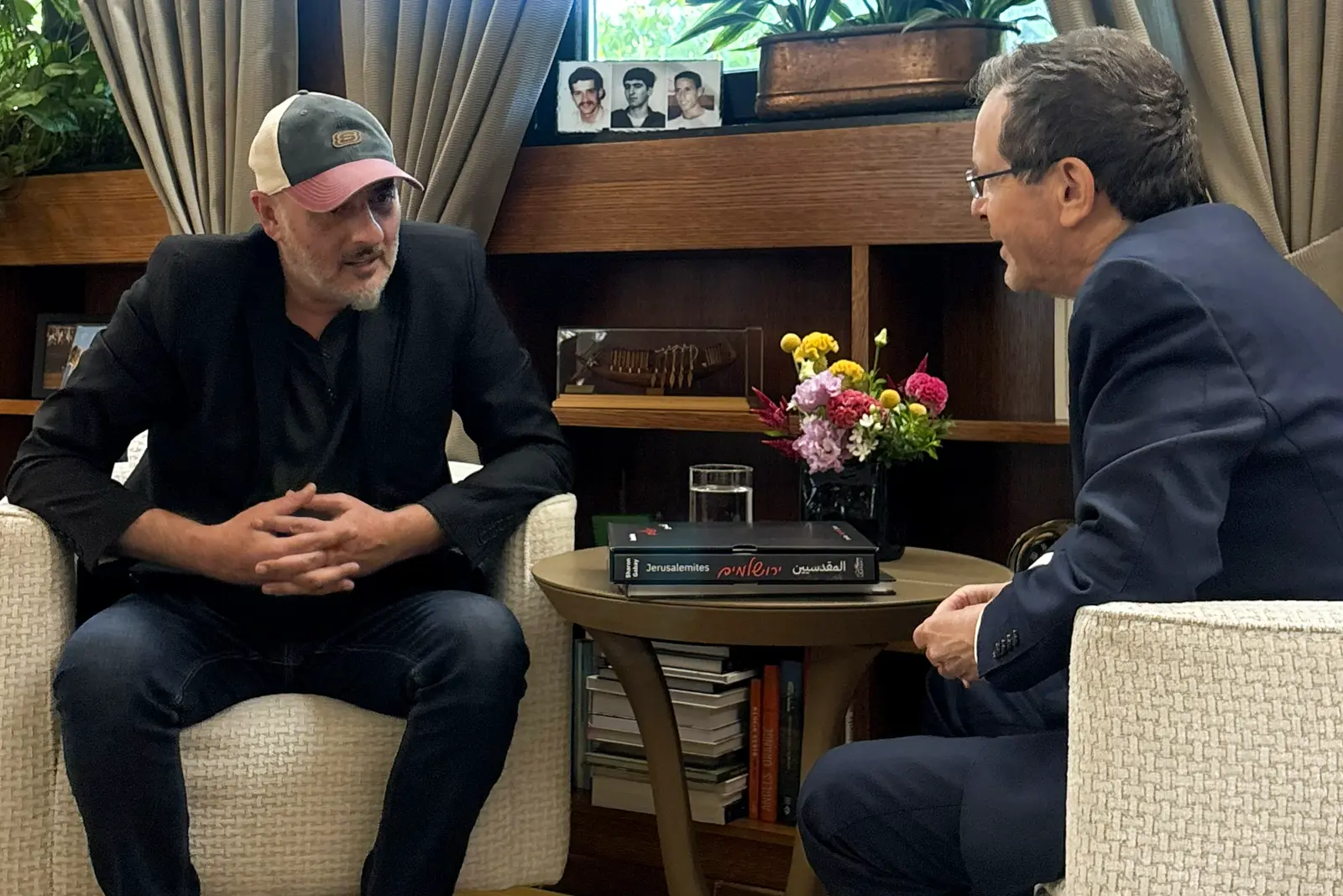
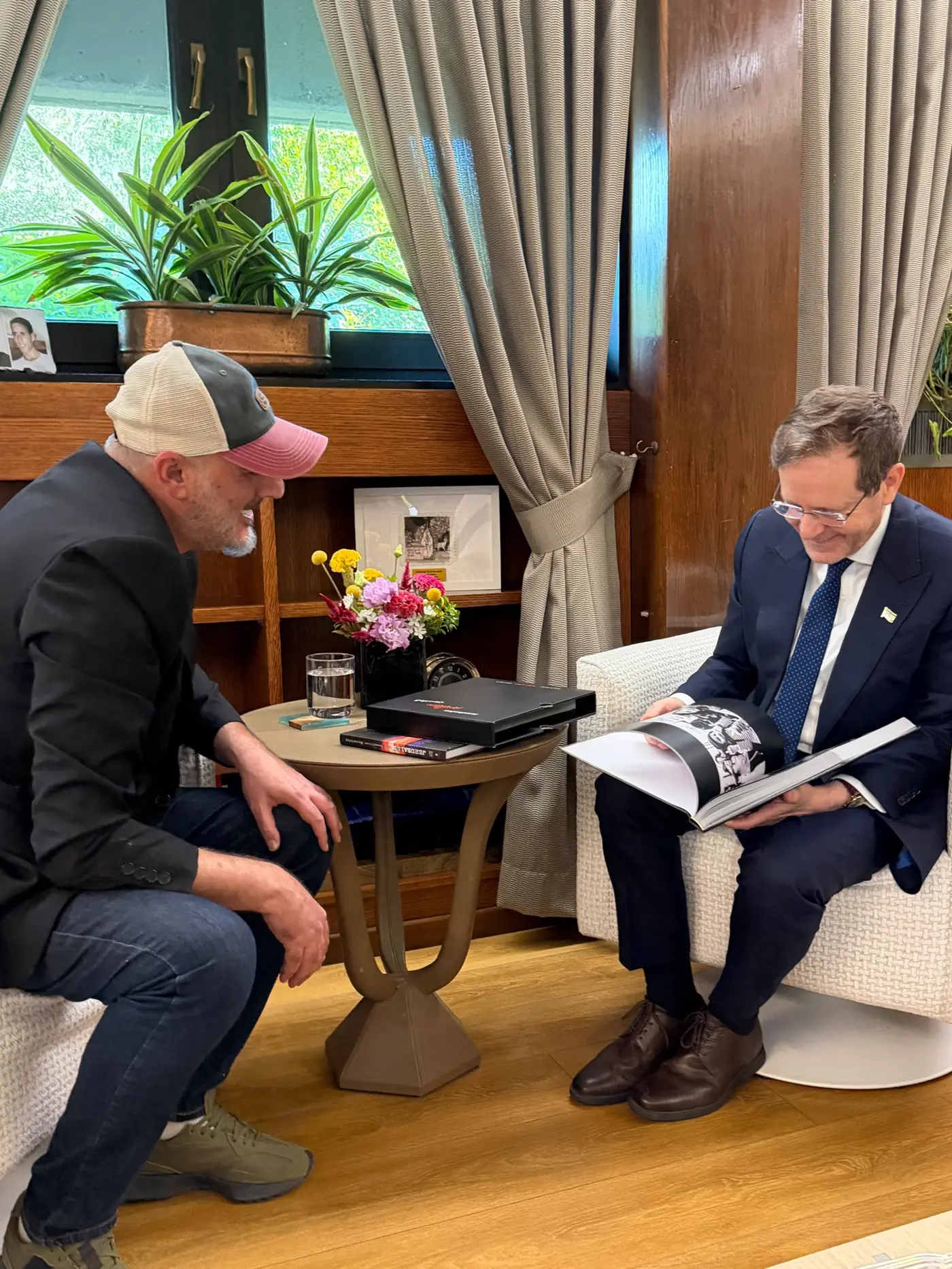
Sharon Gabay was hosted by President Isaac Herzog at the President's Residence (July 19, 2026). (Video in Hebrew.)
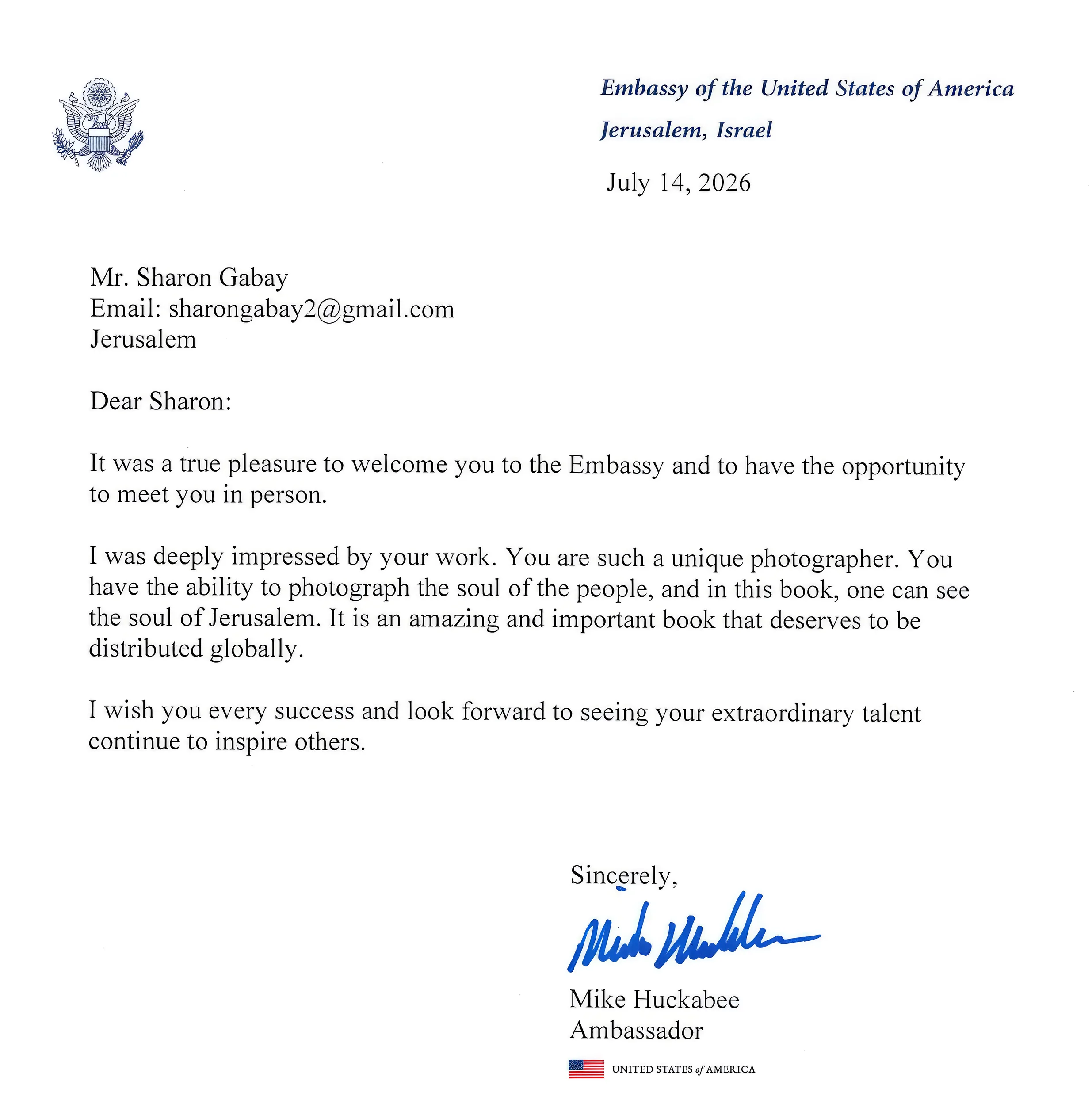
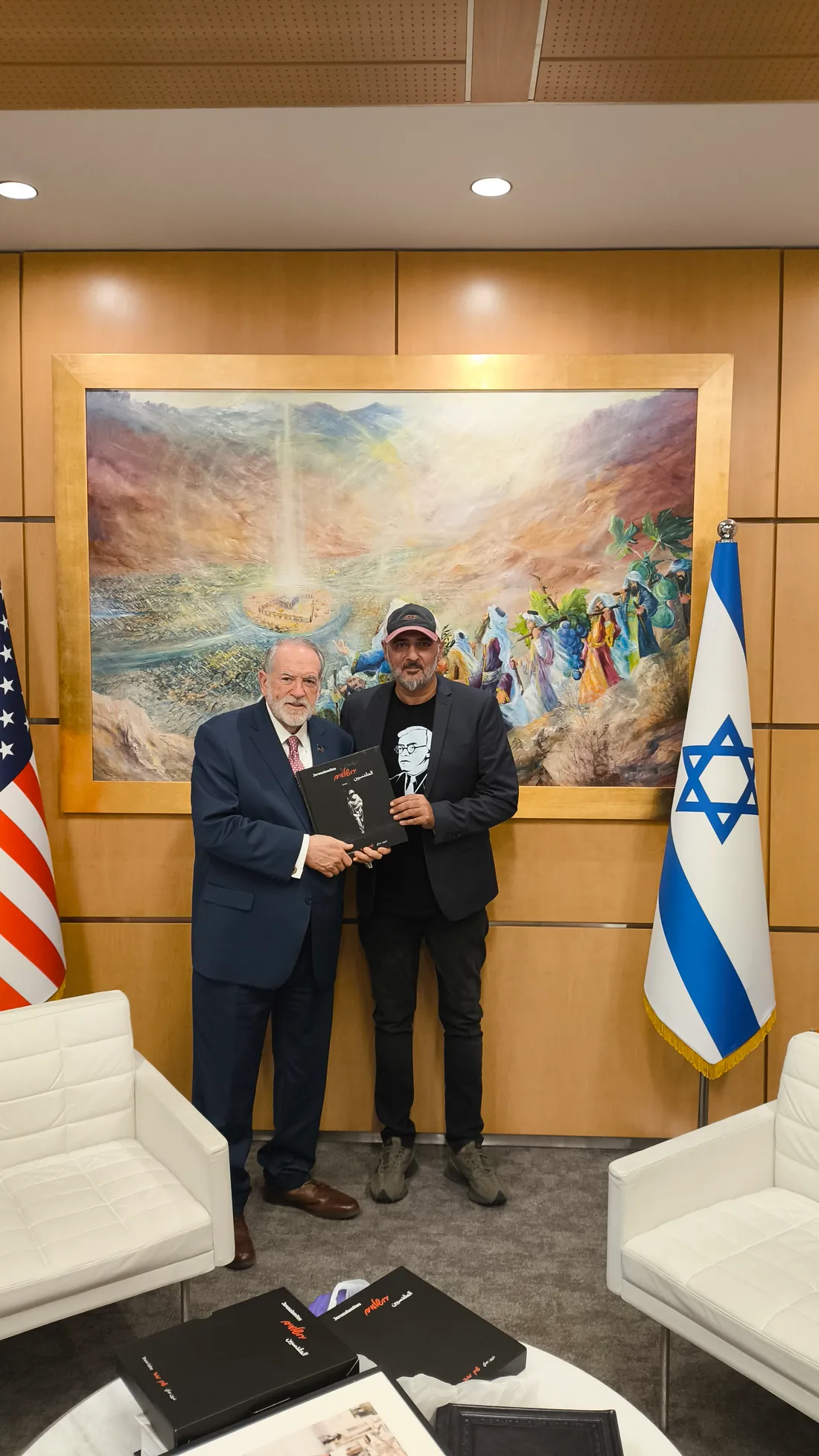
"You are such a unique photographer. You have the ability to photograph the soul of the people, and in this book, one can see the soul of Jerusalem. It is an amazing and important book that deserves to be distributed globally."
The launch-night film of Jerusalemites — the Jerusalem House of Quality gallery, Jerusalem Day eve 2026 (2:45 min; Hebrew with Hebrew subtitles).
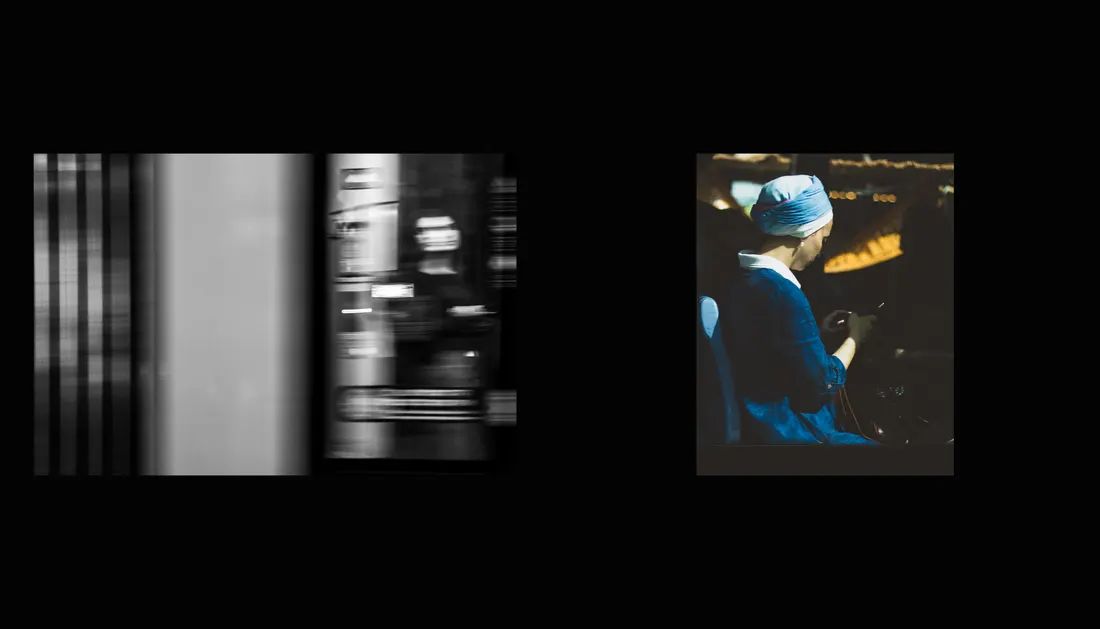
Five original spreads from Jerusalemites — for press use only · Mandatory credit: Sharon Gabay.